EN
EN

Introduction
Protecting products from moisture and light is an important concern for manufacturers, food processors, distributors, and other B2B buyers. Exposure to humidity, oxygen, and light can reduce product quality, affect appearance, change texture, and shorten usable shelf life.
Mylar bags are widely used for packaging products that require strong environmental protection. They are commonly associated with high-barrier flexible packaging and can be designed to reduce the transmission of moisture, light, and gases.
However, the protection provided by a Mylar bag depends on its actual material structure. The term “Mylar bag” is often used commercially to describe bags made with polyester-based films or multilayer structures that may include metallized or aluminum foil layers. Different structures provide different barrier performance.
For businesses purchasing packaging in bulk, understanding how Mylar bags protect products from moisture and light can help improve product stability, reduce waste, and select the right packaging specification.
1. What Are Mylar Bags?
Mylar is a trade name commonly associated with biaxially oriented polyethylene terephthalate, also known as BOPET or polyester film. This type of film is valued for its strength, dimensional stability, and useful barrier characteristics.
Commercial Mylar-style packaging bags may include several layers, such as:
- Polyester film for strength and printability
- Aluminum foil or metallized film for light and gas protection
- Polyethylene for heat sealing
- Other functional layers for flexibility or product compatibility
The final performance depends on the complete film construction rather than the name “Mylar” alone.
A basic transparent polyester bag may offer strength and some protection, while a metallized or foil-laminated Mylar bag may provide much stronger protection against light, moisture, and oxygen.
2. How Mylar Bags Protect Products from Moisture
Moisture can negatively affect many products during storage and transportation. It may cause:
- Mold growth
- Product clumping
- Texture changes
- Loss of crispness
- Corrosion
- Chemical deterioration
- Reduced freshness
- Lower product performance
A properly designed Mylar bag can help reduce moisture transfer between the inside of the package and the surrounding environment.
Moisture Barrier Layers
Many high-barrier Mylar bags use a multilayer structure with a dedicated moisture-resistant layer. Polyethylene is often used as an inner sealing layer because it provides flexibility and reliable heat sealing. Other layers may be added to improve overall moisture resistance.
For products that are sensitive to humidity, the packaging structure should be selected according to the required water vapor barrier performance.
Reduced Humidity Exposure
When the bag is correctly sealed, it creates a controlled internal environment. This reduces direct exposure to outside humidity and helps maintain the product’s original condition.
Moisture-resistant Mylar bags may be suitable for:
- Dried foods
- Coffee
- Tea
- Snacks
- Powdered ingredients
- Pet food
- Seeds
- Nutritional powders
- Industrial powders
- Moisture-sensitive components
The bag does not remove moisture already present in the product. If the product is packed with excessive moisture, the package may not prevent quality problems. Products should therefore be properly dried, processed, or conditioned before packaging.
3. Why Heat Sealing Matters for Moisture Protection
The film structure is only one part of the packaging system. The seal is also essential.
A bag with strong moisture barrier film may still fail if it has:
- Weak seals
- Incomplete seals
- Wrinkles in the sealing area
- Contamination near the seal
- Pinholes
- Tears
- Improper sealing temperature
A reliable heat seal helps prevent moisture from entering through the opening of the bag. For large-scale packaging operations, the bag must also be compatible with the customer’s filling and sealing equipment.
B2B buyers should evaluate:
- Seal strength
- Seal width
- Sealing temperature
- Machine compatibility
- Leakage resistance
- Performance after transportation
Sample testing with the actual product and packaging machine can help identify sealing problems before mass production.
4. How Mylar Bags Protect Products from Light
Light can affect products in several ways. Depending on the product, exposure to sunlight or artificial light may cause:
- Color fading
- Oxidation
- Flavor changes
- Aroma loss
- Nutrient degradation
- Reduced product appearance
- Chemical instability
Light protection is especially important for products containing oils, fats, natural pigments, or light-sensitive ingredients.
Metallized Mylar Bags
Metallized Mylar bags contain a thin metal coating, usually aluminum, applied to a plastic film. This reflective layer can significantly reduce light transmission.
Metallized bags are often selected when businesses need:
- Improved light protection
- A reflective appearance
- Moderate-to-high barrier performance
- Flexible packaging
- Attractive printed surfaces
The level of protection depends on the quality and thickness of the metallized layer, as well as the rest of the film structure.
Aluminum Foil Laminated Bags
For stronger light protection, manufacturers may use aluminum foil laminated between plastic film layers.
Foil-laminated bags can provide a very high level of protection against light when the package is properly manufactured and sealed. They may be suitable for products that are particularly sensitive to sunlight or visible light.
Potential applications include:
- Coffee
- Tea
- Specialty food ingredients
- Nutritional powders
- Light-sensitive products
- Certain chemicals
- High-value dry goods
Foil-laminated packaging may cost more than standard plastic bags, so buyers should select it according to the actual protection requirements.
5. Moisture and Light Protection Work Together
Moisture and light can cause product deterioration independently, but they may also contribute to quality loss together.
For example, a product exposed to both humidity and light may experience faster oxidation, color changes, texture deterioration, or loss of freshness.
A high-barrier Mylar bag can combine:
- Moisture resistance
- Light protection
- Oxygen barrier performance
- Mechanical strength
- Reliable sealing
- Flexible packaging design
This combination can help businesses protect products throughout the supply chain.
However, the best barrier structure depends on the product. A dry powder may require strong moisture protection, while coffee may require a combination of oxygen, moisture, and light barriers.
6. Mylar Bags for Coffee and Tea Packaging
Coffee and tea products can be sensitive to moisture, oxygen, light, and aroma loss.
Mylar-style packaging can help protect these products by reducing exposure to external environmental conditions.
For coffee packaging, buyers may consider:
- Foil-laminated structures
- Metallized films
- One-way degassing valves
- Resealable zippers
- Strong heat seals
- Custom printed surfaces
- Different bag sizes
For tea packaging, light and moisture protection may be particularly important for maintaining aroma, color, and flavor.
The packaging structure should be selected based on the type of coffee or tea, expected storage period, filling process, and distribution conditions.
7. Mylar Bags for Dried Food and Snacks
Dried foods and snacks may lose quality when exposed to humidity. Crispy products can become soft, while powdered products may absorb moisture and form lumps.
Mylar bags with suitable moisture barrier properties can help protect:
- Dried fruit
- Nuts
- Crackers
- Chips
- Granola
- Powdered foods
- Dehydrated vegetables
- Dry ingredients
For products that are consumed in multiple portions, resealable Mylar bags may help reduce exposure after opening.
A zipper closure can be useful, but it does not provide the same protection as the original factory seal. Businesses should consider both initial sealing and post-opening use when selecting the bag design.
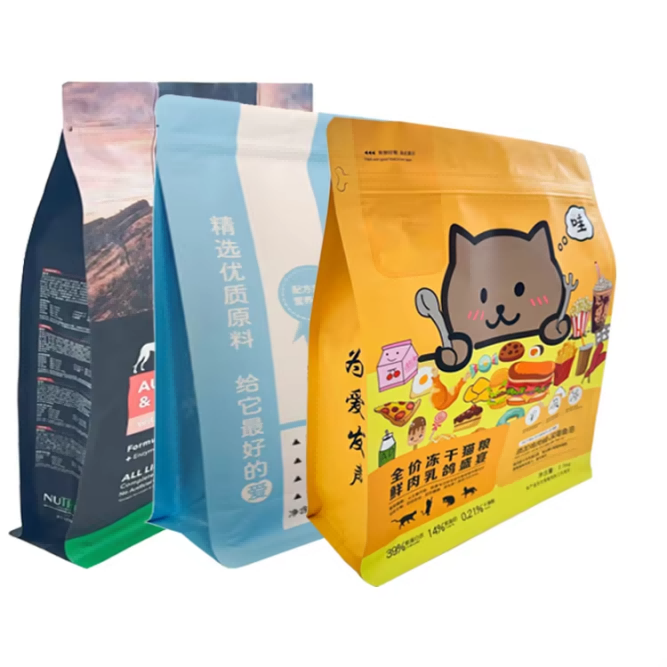
8. Mylar Bags for Pet Food and Animal Nutrition Products
Pet food and animal nutrition products may require protection from moisture, oxygen, light, and contamination.
Packaging requirements vary according to the product type:
- Dry pet food may require moisture and oxygen protection.
- Pet treats may require puncture resistance and resealability.
- Powdered supplements may require strong moisture barriers.
- Oil-containing products may require suitable chemical compatibility.
- Bulk products may require stronger film and seals.
Mylar bags can be customized with different thicknesses, dimensions, closures, and printed designs to meet these requirements.
For large-volume pet food packaging, buyers should also evaluate bag strength, filling efficiency, stacking performance, and transportation durability.
9. Mylar Bags for Powders and Industrial Products
Moisture protection is also important for industrial products and powdered materials. Humidity may cause clumping, reduced flowability, chemical changes, or lower performance.
Potential applications include:
- Chemical powders
- Mineral powders
- Pigments
- Food additives
- Agricultural materials
- Dry construction ingredients
- Specialty industrial components
For these products, packaging selection should consider:
- Material compatibility
- Moisture sensitivity
- Product weight
- Dust control
- Puncture resistance
- Seal strength
- Storage duration
- Transportation conditions
Not every Mylar bag is suitable for every chemical or industrial product. Buyers should provide product information to the packaging manufacturer and confirm compatibility before placing a large order.
10. Multilayer Construction Improves Performance
A multilayer Mylar bag can combine the advantages of several materials.
A typical structure may include:
Outer Polyester Layer
The outer polyester layer can provide:
- High tensile strength
- Dimensional stability
- Printability
- Abrasion resistance
- A smooth appearance
Barrier Layer
The barrier layer may be metallized film or aluminum foil. Its function may include reducing:
- Light transmission
- Oxygen transmission
- Moisture transmission
Inner Sealant Layer
The inner polyethylene or other sealant layer can provide:
- Heat-sealing performance
- Flexibility
- Product contact compatibility
- Bag formation
The exact structure should be developed according to the product and packaging process. A packaging supplier should not recommend the same film construction for every application.
11. Customization Options for B2B Buyers
Mylar bags can be customized to meet different commercial and technical requirements.
Common options include:
- Custom bag dimensions
- Custom film thickness
- Printed branding
- Matte or glossy finish
- Stand-up pouch format
- Flat pouch format
- Side gussets
- Bottom gussets
- Zipper closures
- Tear notches
- Hang holes
- Spouts
- Handles
- Vacuum-compatible structures
- Different barrier levels
For products requiring strong moisture and light protection, customization should focus on performance before appearance.
A visually attractive bag is not necessarily suitable if its film structure cannot protect the product during storage and transportation.
12. How to Choose the Right Mylar Bag Structure
B2B buyers should consider several factors before selecting a Mylar bag.
Product Sensitivity
Determine whether the product is sensitive to:
- Moisture
- Oxygen
- Light
- Temperature
- Odor transfer
- Physical pressure
Required Shelf Life
A longer expected shelf life may require stronger barrier properties and more reliable seals.
Storage Conditions
Consider whether the product will be stored in:
- Dry warehouses
- Humid environments
- Cold storage
- Frozen storage
- Outdoor facilities
- Long-distance transportation
Packaging Equipment
The bag must be compatible with the filling, vacuum, and sealing equipment used by the customer.
Product Weight
Heavy products may require thicker film, stronger seals, and reinforced bag construction.
Destination Market
Food-contact requirements, labeling rules, and documentation may vary by destination country. Buyers should confirm applicable requirements before production.
13. Testing Is Essential Before Mass Production
Packaging performance should be verified through testing rather than assumed from the material name.
Depending on the application, useful tests may include:
- Water vapor transmission testing
- Oxygen transmission testing
- Light transmission testing
- Seal strength testing
- Leakage testing
- Puncture resistance testing
- Tensile strength testing
- Drop testing
- Compression testing
- Temperature testing
- Product compatibility testing
For shelf-life-sensitive products, businesses should test the final product in the final packaging structure under representative storage conditions.
Testing should include the complete package, because performance can be affected by the film, seals, closures, printing, bag shape, and filling process.
14. Common Mistakes When Buying Mylar Bags
Some purchasing mistakes can reduce packaging performance.
Choosing Based Only on Appearance
A shiny silver appearance does not automatically guarantee high barrier performance. Buyers should request technical specifications.
Ignoring Seal Quality
Even strong barrier film can fail if the seal is weak or contaminated.
Selecting the Wrong Thickness
A film that is too thin may be vulnerable to punctures, while excessive thickness may increase cost without providing meaningful additional value.
Not Testing with the Product
Different products may interact differently with packaging materials. Actual product testing is important.
Ignoring Post-Opening Protection
If the product is used over several weeks, a resealable closure may be beneficial.
Focusing Only on Unit Price
The cheapest bag may create higher costs through spoilage, leakage, product waste, or customer complaints.
15. Working with an Experienced Packaging Manufacturer
An experienced flexible packaging manufacturer can help buyers choose a suitable Mylar bag structure based on product requirements.
A reliable supplier should be able to provide:
- Material structure recommendations
- Custom size development
- Printing support
- Sample production
- Seal testing
- Barrier performance information
- Quality control procedures
- Production capacity
- Delivery planning
- Export packaging support
Before placing a bulk order, buyers should confirm:
- Film structure
- Film thickness
- Bag dimensions
- Printing design
- Closure type
- Seal requirements
- Product compatibility
- Testing standards
- Production lead time
- Packaging and shipping details
Clear technical communication can reduce errors and improve consistency between sample approval and mass production.
Conclusion
Mylar bags can protect products from moisture and light through the use of polyester film, metallized layers, aluminum foil, sealant films, and customized multilayer structures.
Moisture-resistant packaging helps reduce humidity exposure, while metallized or foil-laminated structures can limit light transmission. When combined with reliable sealing, suitable film thickness, and proper bag design, these features can support better product quality during storage and transportation.
The most suitable Mylar bag depends on the product’s sensitivity, required shelf life, storage environment, packaging equipment, and destination market. For B2B procurement, buyers should evaluate technical specifications, conduct product testing, and work with a manufacturer capable of supplying consistent custom packaging.
By selecting the right Mylar bag structure, businesses can improve product protection, reduce packaging-related losses, and support more reliable distribution and long-term product quality.
Table of Contents
- Introduction
- 1. What Are Mylar Bags?
- 2. How Mylar Bags Protect Products from Moisture
- 3. Why Heat Sealing Matters for Moisture Protection
- 4. How Mylar Bags Protect Products from Light
- 5. Moisture and Light Protection Work Together
- 6. Mylar Bags for Coffee and Tea Packaging
- 7. Mylar Bags for Dried Food and Snacks
- 8. Mylar Bags for Pet Food and Animal Nutrition Products
- 9. Mylar Bags for Powders and Industrial Products
- 10. Multilayer Construction Improves Performance
- 11. Customization Options for B2B Buyers
- 12. How to Choose the Right Mylar Bag Structure
- 13. Testing Is Essential Before Mass Production
- 14. Common Mistakes When Buying Mylar Bags
- 15. Working with an Experienced Packaging Manufacturer
- Conclusion