EN
EN

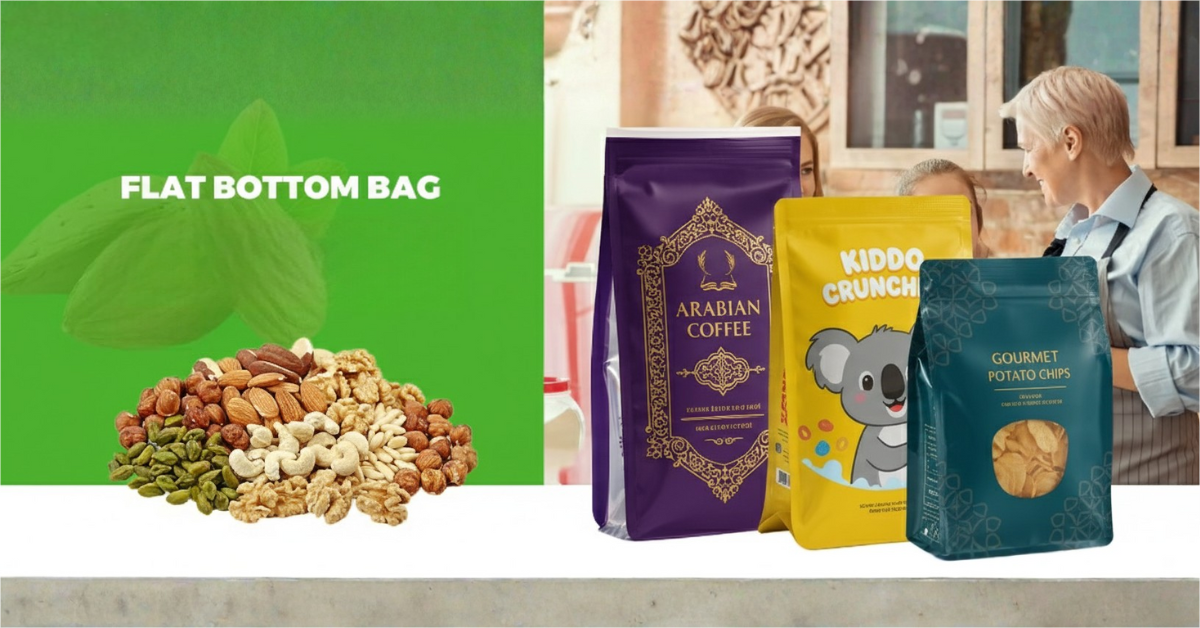
In B2B food packaging procurement, customization is no longer limited to printing a company logo on a standard bag. Food manufacturers, wholesalers, distributors, and private-label brands increasingly require packaging that matches their products, production equipment, storage conditions, branding strategy, and target markets. The right customization options can improve product protection, packing efficiency, shelf presentation, and supply chain performance.
However, customized food packaging bags also require more technical coordination than standard packaging. Buyers must evaluate material structure, bag format, size, printing, sealing, barrier performance, compliance documents, and production consistency before confirming a bulk order.
This guide explains the major customization options that procurement teams should consider when sourcing food packaging bags from a B2B manufacturer.
1. Customize the Packaging Material Structure
Material selection is one of the most important customization decisions. Different food products require different levels of strength, flexibility, oxygen resistance, moisture protection, and sealing performance.
Food packaging bags may use single-layer or multilayer film structures. Multilayer packaging combines different materials to achieve specific functions.
For example, one layer may provide:
- Mechanical strength
- Puncture resistance
- Flexibility
- Heat-sealing performance
- Oxygen barrier
- Moisture barrier
- Light protection
- Printing support
The appropriate structure depends on the product and storage conditions.
Material Options for Different Foods
Fresh meat and seafood may require strong puncture resistance and reliable sealing. Dry foods may need protection against moisture and oxygen. Coffee and nuts may require aroma retention and improved barrier performance. Frozen foods need materials that remain flexible under low temperatures.
During procurement, buyers should request the complete material structure rather than only a general description such as “food-grade plastic bag.”
Important specifications include:
- Material composition
- Layer structure
- Total thickness
- Sealing layer
- Barrier performance
- Temperature range
- Recommended food applications
Material customization should always be based on the actual product and supply chain rather than appearance alone.
2. Customize Bag Size and Dimensions
Food packaging bags can be customized according to product size, weight, shape, and packing method. Correct dimensions can reduce material waste and improve production efficiency.
Standard packaging sizes may be suitable for common food portions, but custom dimensions are often more effective for bulk food operations.
Businesses can customize:
- Bag length
- Bag width
- Gusset size
- Opening size
- Sealing area
- Film thickness
- Product loading space
- Hanging hole position
- Tear notch position
For example, a bag for large meat cuts may need more loading space and stronger seals. A bag for small food portions may require tighter dimensions to reduce excess packaging material.
When confirming dimensions, buyers should provide accurate product measurements and allow sufficient space for loading and sealing. A bag that is too small may cause sealing problems, while an oversized bag may increase material consumption.
3. Select the Right Bag Format
Different bag formats serve different product and production requirements. B2B buyers should select a format based on the packing process, storage method, and final sales channel.
Common options include:
Flat Bags
Flat bags are widely used for food portions, meat, seafood, and other products with simple shapes. They are easy to stack and may be suitable for manual or automatic packing.
Three-Side-Sealed Bags
Three-side-sealed bags provide a convenient opening for product loading and can be customized in different sizes and thicknesses. They are commonly used for food, snacks, dry products, and processed food.
Stand-Up Pouches
Stand-up pouches provide shelf stability and can offer strong visual presentation. They may be customized with zippers, tear notches, spouts, or other functional features.
Vacuum Pouches
Vacuum pouches are designed for applications where air removal and close product contact are important. Their material structure should be matched with the vacuum machine and food type.
Gusseted Bags
Gusseted bags provide additional volume and may be useful for bulky or high-capacity products. They can be customized for storage, transportation, and display requirements.
The best format should balance product protection, loading efficiency, storage space, and branding requirements.
4. Customize Printing and Brand Presentation
Printing is one of the most visible customization options. For private-label food brands, packaging is often an important part of product recognition and purchasing decisions.
Businesses can customize:
- Brand logo
- Product name
- Product images
- Nutrition information
- Ingredients
- Usage instructions
- Storage instructions
- Barcode
- QR code
- Country of origin
- Contact information
- Brand colors
- Promotional messages
Printing can be used to create a consistent visual identity across different product categories and package sizes.
Choose the Appropriate Printing Method
The printing method should be selected according to order volume, design complexity, film material, and required image quality.
Common printing options may include:
- Rotogravure printing
- Flexographic printing
- Digital printing
- Simple one-color printing
- Multi-color printing
Rotogravure printing may be suitable for large-volume orders with consistent designs. Digital printing may be useful for short runs, multiple designs, or market testing.
Before production, buyers should approve the final artwork and confirm:
- Color references
- Logo proportions
- Text accuracy
- Barcode readability
- Image resolution
- Printing position
- Bleed and trim areas
- Language versions
A professional pre-production proof can help prevent costly printing errors.
5. Add Functional Packaging Features
Customization should not focus only on visual appearance. Functional features can improve usability, product protection, and packing efficiency.
Depending on the food application, businesses may request:
- Resealable zipper
- Tear notch
- Spout
- Handle
- Hanging hole
- Transparent window
- Matte finish
- Gloss finish
- Anti-slip surface
- Easy-open structure
- Tamper-evident feature
- Special sealing area
For dry food products, a zipper may support repeated opening and closing. For liquid or semi-liquid products, a spout may improve dispensing. For retail display, a hanging hole or stand-up structure may improve shelf presentation.
Every additional feature may affect material cost, production lead time, sealing performance, and minimum order quantity. Buyers should confirm whether the feature is necessary for the product and target market.
6. Customize Barrier Performance
Barrier requirements vary according to the food’s sensitivity and expected storage period.
Businesses may need to customize protection against:
- Oxygen
- Moisture
- Light
- Odor
- Grease
- External contamination
Products such as coffee, nuts, cheese, meat, and prepared foods may require different barrier levels.
For example, oxygen-sensitive products may require a stronger oxygen barrier. Moisture-sensitive products may need improved moisture protection. Light-sensitive products may benefit from an opaque or metalized structure.
Procurement teams should ask suppliers for relevant performance data, such as:
- Oxygen transmission rate
- Moisture vapor transmission rate
- Seal strength
- Puncture resistance
- Film thickness
- Temperature performance
Barrier performance should be evaluated together with the food type, package size, storage temperature, and distribution period.
7. Customize Sealing Performance
The sealing area is essential for preventing leakage and maintaining package integrity. Different products and machines may require different sealing specifications.
Businesses can discuss:
- Seal width
- Seal strength
- Sealing temperature
- Sealing time
- Sealing pressure
- Easy-open sealing
- Double sealing
- Special sealing patterns
For products containing oil, liquid, or powder, the seal area must be designed to reduce contamination risk. For frozen food, the seal should remain reliable after freezing and transportation.
The bag must also be compatible with the buyer’s equipment. Before mass production, buyers should test the packaging on the actual machine and confirm that the sealing process is stable.
8. Customize Packaging for Different Sales Channels
A food packaging bag used for bulk distribution may have different requirements from a retail package.
Foodservice and Commercial Buyers
Foodservice packaging may prioritize:
- Large capacity
- Strong material
- Easy storage
- Efficient stacking
- Simple labeling
- Reliable transportation protection
Retail Packaging
Retail packaging may require:
- Strong shelf appearance
- Product images
- Nutrition information
- Barcodes
- Resealable features
- Consumer-friendly opening
- Multiple language versions
Private-Label Brands
Private-label brands often need consistent packaging across multiple products. This may include matching colors, logo placement, package formats, and product information.
The packaging design should be developed according to the intended sales channel rather than using one design for every market.
9. Consider Language and Export-Market Requirements
For international B2B procurement, packaging may need to be customized for different countries or regions.
Customization may include:
- Language versions
- Product descriptions
- Ingredient information
- Nutrition declarations
- Storage instructions
- Importer information
- Country-of-origin statements
- Recycling information
- Barcode formats
- Regulatory symbols
The exact labeling requirements depend on the destination market and food category. Buyers should confirm the requirements with their importer, regulatory consultant, or local authority before printing.
It is important to review all text carefully. A spelling mistake, incorrect ingredient statement, or missing warning may lead to relabeling costs and shipment delays.
10. Review Food-Contact Compliance Documents
Customized packaging must remain suitable for its intended food-contact application. Buyers should request documentation covering the complete packaging structure.
Depending on the destination market, documents may include:
- Food-contact compliance statement
- Migration test report
- Declaration of Compliance
- Material specification sheet
- Certificate of Analysis
- Batch traceability record
- Factory audit report
- Quality management certificate
For the U.S. market, packaging components that contact food must comply with applicable food-contact requirements. This may involve films, adhesives, inks, coatings, and other components.
For the European market, applicable requirements may include Regulation EC 1935/2004 and Good Manufacturing Practice Regulation EC 2023/2006. Plastic materials may also be subject to Regulation EU 10/2011.
Additional certifications may be requested by specific customers, including:
- ISO 9001
- BRCGS Packaging Materials
- ISO 22000
- HACCP-based food safety documentation
Certificates should be verified carefully. Buyers should check the issuing organization, validity period, factory location, product scope, and whether the document applies to the actual packaging material being purchased.
11. Understand MOQ, Tooling, and Production Costs
Customization may involve additional costs beyond the basic bag price.
Common cost factors include:
- Printing cylinders
- Artwork preparation
- Special materials
- Custom bag sizes
- Special accessories
- New tooling
- Testing
- Sample production
- Small-batch production
- Additional quality inspections
The minimum order quantity may vary according to the material structure, printing method, and production process.
Before placing an order, buyers should request a detailed quotation that separates:
- Packaging unit price
- Printing cost
- Cylinder or tooling cost
- Sample cost
- Testing cost
- Packaging and shipping cost
- Additional certification cost
A clear quotation helps procurement teams compare suppliers more accurately and avoid unexpected charges.
12. Confirm Sample Approval and Mass-Production Control
A sample approval process is essential for customized food packaging. The approved sample should become the reference for mass production.
The buyer should check:
- Material structure
- Bag dimensions
- Film thickness
- Printing color
- Logo position
- Seal quality
- Opening performance
- Product loading
- Machine compatibility
- Packaging appearance
For large-volume orders, quality control must continue throughout production. The supplier should maintain consistent dimensions, printing, material performance, and sealing quality from batch to batch.
Buyers may also request:
- Pre-production samples
- Production inspection reports
- Finished-product inspection
- Random sampling
- Batch numbers
- Retained samples
- Shipment photographs
Stable batch quality is especially important for food manufacturers with regular replenishment schedules.
13. Work With a Manufacturer That Offers Technical Support
A capable packaging manufacturer should provide more than customized printing. The supplier should help the buyer select the correct structure, format, and production process.
A reliable B2B supplier should be able to support:
- Material recommendations
- Bag structure development
- Artwork review
- Sample production
- Equipment compatibility testing
- Food-contact documentation
- Quality inspection
- Bulk production
- Export packaging
- Replenishment orders
Technical communication is particularly important when the product is sensitive to oxygen, moisture, heat, freezing, or puncture.
The buyer should provide complete information about the food product, target market, packing equipment, order quantity, and expected delivery schedule. This allows the manufacturer to recommend a more suitable packaging solution.
Conclusion
Customization options for food packaging bags in B2B procurement extend far beyond logo printing. Businesses can customize material structures, bag sizes, formats, thicknesses, printing, functional features, barrier performance, sealing properties, and export-market information.
The right customization strategy should improve product protection, packing efficiency, brand presentation, and supply chain reliability without creating unnecessary costs or compliance risks.
Before placing a bulk order, procurement teams should confirm the material specification, bag dimensions, artwork, testing requirements, food-contact documents, MOQ, lead time, and quality control process. A sample approval and production trial can help identify problems before mass manufacturing.
By working with an experienced food packaging manufacturer, businesses can develop packaging bags that are technically suitable, visually consistent, commercially competitive, and reliable for long-term B2B supply.
Table of Contents
- 1. Customize the Packaging Material Structure
- 2. Customize Bag Size and Dimensions
- 3. Select the Right Bag Format
- 4. Customize Printing and Brand Presentation
- 5. Add Functional Packaging Features
- 6. Customize Barrier Performance
- 7. Customize Sealing Performance
- 8. Customize Packaging for Different Sales Channels
- 9. Consider Language and Export-Market Requirements
- 10. Review Food-Contact Compliance Documents
- 11. Understand MOQ, Tooling, and Production Costs
- 12. Confirm Sample Approval and Mass-Production Control
- 13. Work With a Manufacturer That Offers Technical Support
- Conclusion