EN
EN

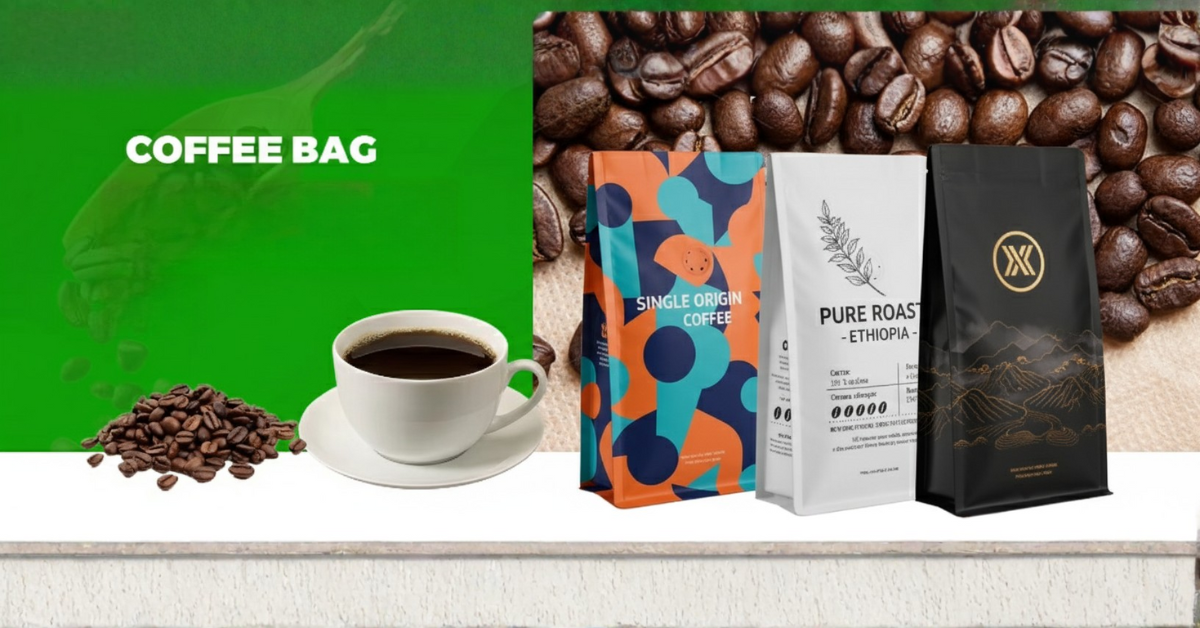
For coffee roasters, private-label brands, wholesalers, and food packaging distributors, customized coffee packaging is an important part of large-scale procurement. A well-designed coffee bag should protect aroma and product quality while also communicating the brand’s identity and supporting efficient production.
When ordering thousands or even millions of coffee bags, customization involves much more than adding a logo. Businesses must consider coffee type, fill weight, bag structure, material barrier, degassing requirements, printing, closures, production equipment, and delivery schedules.
A clear packaging specification can help buyers reduce production risks, control costs, and maintain consistent branding across multiple product lines.
1. Start With the Coffee Product
The packaging should be designed around the coffee rather than selected only by appearance. Whole-bean coffee, ground coffee, instant coffee, and flavored coffee may have different packaging requirements.
Whole-Bean Coffee
Roasted coffee beans can release carbon dioxide after roasting. If the gas cannot escape, pressure may build inside the bag. For freshly roasted whole beans, a one-way degassing valve may be required to release gas while helping limit reverse air entry.
Ground Coffee
Ground coffee has a larger surface area than whole beans and may be more sensitive to oxygen exposure and aroma loss. The packaging should provide suitable barrier protection and a reliable seal.
Instant Coffee
Instant coffee may be sensitive to moisture. A high-barrier structure and secure closure can help reduce moisture exposure during storage and transportation.
Flavored Coffee
Flavored coffee may require additional aroma protection to help preserve the intended flavor profile and reduce odor transfer.
Before requesting a quotation, buyers should provide the supplier with the following information:
- Coffee type
- Whole bean or ground coffee
- Roast-to-pack time
- Fill weight
- Product density
- Expected shelf-life target
- Storage conditions
- Sales channel
- Estimated order quantity
This information allows the manufacturer to recommend a more suitable packaging structure.
2. Select the Right Coffee Bag Format
Coffee packaging can be customized in different formats according to product volume, shelf presentation, packing equipment, and brand positioning.
Stand-Up Pouches
Stand-up pouches are suitable for retail coffee products and can provide a practical balance between cost and shelf presentation. They may include a zipper, tear notch, valve, or other features.
Flat-Bottom Coffee Bags
Flat-bottom bags provide a stable base and can stand upright on retail shelves. They offer a larger printable area and may be suitable for premium coffee brands and larger fill weights.
Side-Gusset Bags
Side-gusset bags are commonly used for coffee beans and larger packages. The gusseted structure can provide additional volume and support a traditional coffee packaging appearance.
Three-Side-Sealed Bags
Three-side-sealed bags may be suitable for sample packs, smaller portions, ground coffee, or specialty formats. They are often easy to customize in different dimensions.
Back-Seal Bags
Back-seal packaging can be developed for specific filling systems and product formats. Its suitability depends on the machine, film structure, and desired package appearance.
The format should be selected based on the product and production process. A visually attractive bag may not be suitable if it cannot run efficiently on the buyer’s filling equipment.
3. Customize the Bag Size and Fill Weight
Large coffee orders often include several product sizes, such as sample packs, retail bags, subscription packs, and wholesale formats.
Common fill weights may include:
- Small trial sizes
- 250 g packages
- 500 g packages
- 1 kg packages
- Larger foodservice sizes
The final bag dimensions should be developed according to coffee density, fill weight, product volume, and selected bag format. Whole beans and ground coffee may occupy different volumes even when the weight is the same.
Businesses should confirm:
- Bag width
- Bag height
- Gusset depth
- Opening size
- Bottom structure
- Seal area
- Valve position
- Zipper position
- Required headspace
Accurate sizing can reduce material waste and improve the appearance of the finished package. An oversized bag may increase costs, while an undersized bag may cause filling and sealing problems.
4. Choose the Appropriate Material Structure
Material selection affects aroma protection, oxygen resistance, moisture protection, flexibility, appearance, and cost.
Coffee packaging may use multilayer structures made from combinations of:
- PET film
- Polyethylene
- Metallized film
- Aluminum foil laminate
- Kraft paper laminate
- Other food-contact packaging materials
Each material has different performance characteristics.
Kraft Paper Appearance
Kraft paper laminate can create a natural or traditional brand image. It is often selected by specialty coffee brands that want an artisanal appearance.
Matte Film
Matte film provides a soft, modern appearance and can support premium branding. It may be combined with high-barrier layers depending on the product requirements.
Gloss Film
Gloss film can create bright colors and a reflective appearance. It may be suitable for bold designs and strong visual presentation.
Aluminum Foil or Metallized Barrier
Aluminum foil and metallized layers may provide improved protection against oxygen, moisture, and light. The appropriate structure should be selected according to the coffee type, storage period, and distribution conditions.
The supplier should provide the complete material structure and explain which layer provides sealing, strength, and barrier performance.
5. Decide Whether a Degassing Valve Is Necessary
A one-way degassing valve is an important option for many freshly roasted coffee products. It allows carbon dioxide released by roasted coffee to escape while helping reduce reverse air entry.
However, a valve should not automatically be added to every coffee package. Its suitability depends on:
- Coffee roast condition
- Time between roasting and packing
- Whole bean or ground coffee
- Packaging process
- Expected gas release
- Storage conditions
- Bag structure
- Valve placement
The valve’s position should be confirmed according to the bag format, artwork, filling level, and sealing area.
Buyers should also check the valve’s compatibility with the selected material and production process. The final packaging should be tested with the actual coffee before mass production.
6. Customize Printing for Brand Recognition
For large orders, custom printing helps coffee brands build a consistent identity across different products and markets.
Printing options may include:
- Brand logo
- Coffee origin
- Roast level
- Flavor description
- Product images
- Brewing instructions
- Net weight
- Nutrition information where required
- Barcode
- QR code
- Website address
- Contact details
- Storage instructions
- Brand story
A consistent visual system can help customers recognize different products within the same coffee family.
For example, a coffee brand may use one design system while changing:
- Color by roast level
- Origin by product line
- Label information by blend
- Bag size by sales channel
- Artwork by seasonal collection
Before printing, buyers should approve the final artwork and check text, colors, barcodes, logo proportions, and required regulatory information.
7. Select the Right Printing Method
The printing method should be selected according to order quantity, number of designs, artwork complexity, and budget.
Digital Printing
Digital printing may be suitable for:
- Small or medium production runs
- Multiple SKUs
- Seasonal products
- Market testing
- Limited-edition coffee
- Frequent artwork changes
It can reduce the need for traditional printing plates in some production routes.
Flexographic Printing
Flexographic printing may be suitable for certain packaging structures and production volumes. It can offer efficient printing for selected designs and materials.
Rotogravure Printing
Rotogravure printing is often considered for high-volume orders with stable artwork. It may provide consistent color reproduction across large production runs, but setup and cylinder costs should be considered.
For large B2B orders, buyers should compare the total project cost rather than only the printing unit price.
8. Add Functional Features
Functional features can improve the user experience and product protection.
Businesses may customize coffee bags with:
- One-way degassing valve
- Resealable zipper
- Tear notch
- Easy-open top
- Hang hole
- Clear window
- Matte coating
- Gloss coating
- Soft-touch finish
- Foil stamping
- Spot UV
- Special bottom construction
A zipper may help consumers reseal the package after opening. A tear notch can improve convenience, while a flat bottom may improve shelf stability.
However, each feature can affect material cost, production complexity, minimum order quantity, and lead time. Buyers should select features based on actual product and sales-channel requirements.
9. Develop a Multi-SKU Packaging System
Large coffee brands often purchase packaging for several origins, roast levels, flavors, and sizes. A coordinated packaging system can improve brand consistency while allowing each SKU to remain distinct.
A multi-SKU system may include:
- Shared logo placement
- Consistent typography
- Controlled brand colors
- Standard information panels
- Different roast-level colors
- Different origin illustrations
- Separate barcodes
- Different fill weights
- Individual valve or zipper positions
When ordering multiple SKUs, buyers should prepare a detailed specification sheet for each design. The document should include quantity, dimensions, material, finish, artwork version, and delivery priority.
This helps reduce confusion during printing and production.
10. Consider Food-Contact and Export Requirements
Coffee packaging must be suitable for its intended food-contact application and destination market.
Depending on the target country, buyers may need to request:
- Food-contact compliance statement
- Material specification
- Migration test report
- Declaration of Compliance
- Certificate of Analysis
- Batch traceability documents
- Factory audit documents
- Quality management certification
For the U.S. market, the packaging components that contact food must comply with applicable food-contact requirements. This may include films, adhesives, inks, coatings, and other packaging components.
For the European market, applicable requirements may include Regulation EC 1935/2004 and Good Manufacturing Practice Regulation EC 2023/2006. Plastic materials may also be subject to Regulation EU 10/2011.
Additional certifications that some B2B buyers may request include:
- ISO 9001
- BRCGS Packaging Materials
- ISO 22000
- HACCP-based food safety documentation
Certification requirements vary by customer and destination market. Buyers should verify that the documents apply to the actual material, factory, and packaging structure being purchased.
11. Plan MOQ, Printing Setup, and Production Costs
Large orders may offer better unit economics, but customization costs should still be reviewed carefully.
Important cost factors include:
- Bag size
- Material structure
- Film thickness
- Printing method
- Number of colors
- Number of SKUs
- Printing cylinders
- Valve quantity
- Zipper type
- Surface finish
- Special accessories
- Testing requirements
- Packaging and shipping
- Order quantity per design
A supplier quotation should clearly identify whether setup fees, printing plate fees, sample costs, and testing charges are included.
For multi-SKU orders, buyers should also confirm whether each design has a separate minimum order quantity. Combining several designs into one project may be possible, but the final conditions depend on the production method and supplier capabilities.
12. Test Samples Before Mass Production
Sample approval is essential for large coffee packaging orders. A printed sample should be checked against both branding and technical requirements.
The buyer should evaluate:
- Bag dimensions
- Material structure
- Film thickness
- Printing quality
- Color accuracy
- Valve position
- Zipper performance
- Seal strength
- Product loading
- Coffee fit
- Shelf appearance
- Machine compatibility
The sample should be tested with the actual coffee product whenever possible.
For freshly roasted coffee, the test should also consider gas release, bag inflation, aroma protection, and storage performance. A bag that looks attractive but does not perform well during packing or storage should not be approved for mass production.
13. Control Quality Across Large Production Batches
Large orders require stable quality throughout the production process. The first approved sample should be used as the reference for future production.
Quality control should cover:
- Material consistency
- Bag dimensions
- Printing registration
- Color variation
- Valve placement
- Zipper position
- Seal quality
- Surface finish
- Packaging quantity
- Carton labeling
- Batch identification
Buyers may request pre-production samples, production inspection reports, retained samples, and pre-shipment photographs.
For long-term supply, batch consistency is especially important. Differences in color, size, film thickness, or valve position can affect brand presentation and packing-line efficiency.
14. Work With an Experienced Coffee Packaging Manufacturer
A reliable supplier should provide technical support throughout the project, from initial design to repeat orders.
The manufacturer should be able to assist with:
- Bag format selection
- Material recommendations
- Barrier structure
- Valve selection
- Size development
- Artwork review
- Sample production
- Machine compatibility
- Food-contact documentation
- Bulk production
- Quality inspection
- Export packing
- Replenishment planning
To receive an accurate quotation, buyers should prepare:
- Coffee type
- Fill weight
- Bag format
- Dimensions
- Material preference
- Valve requirement
- Closure requirement
- Printing artwork
- Number of SKUs
- Quantity per SKU
- Destination country
- Required delivery date
Complete information helps the supplier provide a more accurate price and realistic production schedule.
Conclusion
Customizing coffee packaging for large orders requires coordination between product protection, brand presentation, production efficiency, and export compliance.
Businesses can customize the bag format, size, material structure, barrier performance, degassing valve, zipper, printing, finish, and functional details. The right combination should be selected according to the coffee product, filling process, storage conditions, sales channel, and order volume.
Before confirming mass production, buyers should approve samples, verify food-contact documentation, test the packaging with the actual coffee, and confirm quality control procedures.
With a clear specification and an experienced packaging manufacturer, coffee brands can achieve consistent packaging quality, stronger brand recognition, lower procurement risks, and a more efficient long-term supply chain.
Table of Contents
- 1. Start With the Coffee Product
- 2. Select the Right Coffee Bag Format
- 3. Customize the Bag Size and Fill Weight
- 4. Choose the Appropriate Material Structure
- 5. Decide Whether a Degassing Valve Is Necessary
- 6. Customize Printing for Brand Recognition
- 7. Select the Right Printing Method
- 8. Add Functional Features
- 9. Develop a Multi-SKU Packaging System
- 10. Consider Food-Contact and Export Requirements
- 11. Plan MOQ, Printing Setup, and Production Costs
- 12. Test Samples Before Mass Production
- 13. Control Quality Across Large Production Batches
- 14. Work With an Experienced Coffee Packaging Manufacturer
- Conclusion