EN
EN

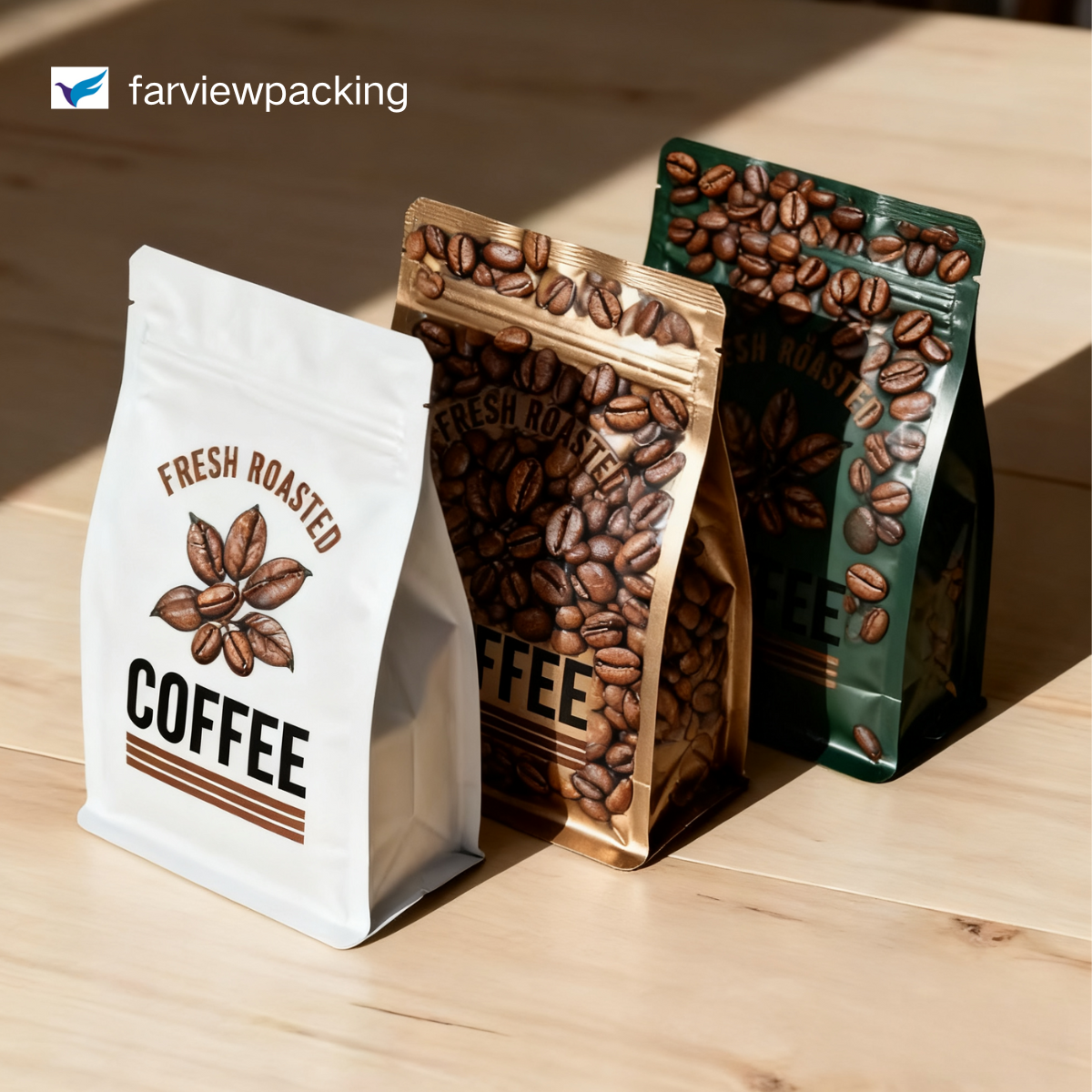
Businesses ordering coffee in large quantities face unique packaging challenges that require strategic customization to maintain product freshness, enhance brand visibility, and optimize storage efficiency. Custom coffee packaging for bulk orders differs significantly from small-batch solutions, as it must balance cost-effectiveness with quality preservation while supporting extensive distribution networks. Understanding how to effectively customize coffee packaging for large orders involves careful consideration of material selection, branding elements, functional features, and supply chain compatibility to ensure successful market penetration and customer satisfaction.
Large-scale coffee packaging customization requires businesses to navigate complex decisions involving barrier properties, valve integration, printing capabilities, and regulatory compliance while maintaining economies of scale. The customization process for bulk orders typically involves collaboration between procurement teams, packaging engineers, and brand managers to develop solutions that protect coffee quality throughout extended distribution cycles. Modern coffee packaging technologies enable businesses to implement sophisticated customization strategies that enhance product differentiation and operational efficiency across high-volume production runs.
Material Selection and Barrier Technology for Large-Scale Coffee Packaging
Advanced Barrier Film Configurations
Businesses customizing coffee packaging for large orders must prioritize advanced barrier film configurations that provide exceptional oxygen and moisture protection over extended storage periods. Multi-layer laminated structures combining polyethylene, aluminum foil, and specialized barrier polymers create optimal protection for coffee beans and grounds while maintaining flexibility for high-speed packaging operations. These barrier technologies prevent oxidation and staleness that could compromise product quality across vast distribution networks, ensuring consistent flavor profiles regardless of storage duration or environmental conditions.
The selection of appropriate barrier materials directly impacts coffee packaging performance in large-scale operations, where products may remain in distribution channels for months before reaching end consumers. High-performance barrier films utilizing metallized polyester or ethylene vinyl alcohol copolymers provide superior protection against volatile compound migration while supporting the structural integrity required for automated filling and sealing processes. Businesses must evaluate barrier properties against cost considerations to optimize coffee packaging specifications that deliver reliable performance across entire product lifecycles.
Sustainable Material Integration
Large-order coffee packaging customization increasingly incorporates sustainable material alternatives that meet environmental responsibility goals while maintaining product protection standards. Biodegradable and compostable film options, including PLA-based laminates and paper-based barrier coatings, enable businesses to develop eco-friendly coffee packaging solutions that appeal to environmentally conscious consumers. These sustainable materials require careful evaluation of barrier properties and processing compatibility to ensure they meet the demanding requirements of high-volume coffee packaging operations.
The integration of recycled content into coffee packaging materials represents another important customization consideration for businesses managing large orders. Post-consumer recycled polyethylene and recycled paper substrates can be incorporated into packaging structures while maintaining necessary barrier properties through advanced coating technologies. Businesses must balance sustainability objectives with performance requirements when customizing coffee packaging for large orders, ensuring that environmental benefits do not compromise product quality or shelf life expectations.
Valve Systems and Functional Feature Integration
One-Way Degassing Valve Technology
Professional-grade one-way degassing valves represent critical functional components in customized coffee packaging for large orders, enabling freshly roasted coffee to release carbon dioxide while preventing oxygen ingress that causes staling. These valve systems must be precisely calibrated to accommodate varying degassing rates across different coffee roast profiles and packaging volumes. Advanced valve technologies incorporate micro-porous membranes and pressure-sensitive sealing mechanisms that maintain optimal internal atmospheres throughout extended storage and distribution periods common in large-order scenarios.
The selection and placement of degassing valves in large-order coffee packaging requires careful consideration of packaging geometry, filling processes, and sealing equipment compatibility. Valve positioning affects both functional performance and visual aesthetics, particularly when integrated with branding elements and information panels. Businesses must ensure valve systems can withstand the mechanical stresses associated with high-speed packaging lines while maintaining reliable performance across varying temperature and humidity conditions encountered during distribution.
Resealable Closure Systems
Advanced resealable closure systems enhance the functionality of customized coffee packaging for large orders by extending product freshness after initial opening while improving user convenience. Zip-lock closures, slider mechanisms, and adhesive resealing strips enable consumers to maintain optimal storage conditions for coffee products throughout consumption cycles. These closure systems must be engineered to withstand repeated opening and closing while maintaining airtight seals that preserve coffee quality and aroma.
The integration of resealable closures into large-order coffee packaging requires careful consideration of manufacturing processes, cost implications, and consumer usage patterns. Heat-sealed zip closures and pressure-sensitive adhesive systems must be compatible with existing packaging equipment while providing reliable performance across diverse storage environments. Businesses customizing coffee packaging must evaluate closure system durability against user convenience to develop solutions that enhance product value without significantly increasing manufacturing complexity or costs.
Branding and Visual Design Customization
High-Impact Graphics and Printing Technologies
Large-order coffee packaging customization enables businesses to implement sophisticated branding strategies through advanced printing technologies that deliver exceptional visual impact and brand recognition. Rotogravure and flexographic printing processes support high-resolution graphics, vibrant colors, and complex designs across extensive production runs while maintaining consistent quality standards. These printing capabilities allow businesses to incorporate detailed product information, origin stories, brewing instructions, and brand messaging that differentiate their coffee products in competitive markets.
The customization of coffee packaging graphics for large orders requires strategic consideration of color psychology, shelf appeal, and brand positioning to maximize market impact. Premium printing techniques including metallic inks, spot varnishes, and tactile coatings create distinctive packaging appearances that communicate quality and craftsmanship. Businesses must balance visual sophistication with production efficiency when customizing coffee packaging designs for high-volume orders, ensuring that complex graphics do not compromise manufacturing speed or increase defect rates.
Information Architecture and Regulatory Compliance
Effective customization of coffee packaging for large orders requires comprehensive information architecture that balances regulatory compliance requirements with marketing objectives and consumer communication needs. Nutritional information, origin certifications, brewing recommendations, and storage instructions must be integrated into packaging designs while maintaining visual hierarchy and readability. Advanced printing capabilities enable businesses to incorporate variable data printing for batch codes, expiration dates, and traceability information across large production runs.
The integration of regulatory compliance elements into customized coffee packaging designs requires careful coordination between legal, marketing, and production teams to ensure accuracy and consistency across large orders. QR codes, augmented reality triggers, and digital connectivity features can be incorporated into packaging designs to provide extended product information and enhance consumer engagement. Businesses must ensure that all compliance information remains legible and accessible throughout the packaging lifecycle while supporting brand objectives and consumer experience goals.
Production Scalability and Supply Chain Integration
High-Speed Manufacturing Compatibility
Customized coffee packaging for large orders must be engineered for compatibility with high-speed manufacturing equipment that can efficiently handle extensive production volumes while maintaining consistent quality standards. Packaging specifications including material thickness, seal strength parameters, and dimensional tolerances must be optimized for automated filling, sealing, and inspection processes. Advanced packaging machinery requires precise material properties and geometric consistency to achieve optimal production speeds without compromising package integrity or product quality.
The development of coffee packaging specifications for large orders involves close collaboration with equipment manufacturers and packaging converters to ensure seamless integration with existing production infrastructure. Material selection, barrier layer configuration, and printing requirements must be balanced against manufacturing capabilities and throughput objectives. Businesses must consider the complete production workflow when customizing coffee packaging, from raw material handling through finished product palletization, to optimize operational efficiency and minimize production disruptions.
Distribution and Storage Optimization
Large-order coffee packaging customization must account for the unique challenges of extended distribution networks and varied storage conditions that products encounter before reaching end consumers. Packaging durability, stacking strength, and environmental resistance become critical factors when coffee products may be stored in warehouses, transported across diverse climates, and displayed in retail environments for extended periods. Customized packaging specifications must provide reliable protection throughout these complex supply chains while maintaining visual appeal and functional performance.
The optimization of coffee packaging for large-order distribution requires careful consideration of case packing efficiency, palletization patterns, and transportation logistics to minimize shipping costs and maximize supply chain effectiveness. Packaging dimensions, weight distribution, and structural integrity must be designed to support efficient handling and storage while protecting product quality. Businesses must evaluate the complete distribution cycle when customizing coffee packaging, ensuring that design decisions support both product protection and logistical efficiency across global supply networks.
Cost Management and Quality Assurance Strategies
Economies of Scale and Material Procurement
Large-order coffee packaging customization enables businesses to achieve significant cost advantages through economies of scale in material procurement, manufacturing setup, and quality control processes. Bulk purchasing agreements for specialized barrier films, printing inks, and functional components can substantially reduce per-unit costs while ensuring consistent material quality across extended production runs. Strategic partnerships with packaging suppliers and converters provide access to advanced technologies and manufacturing capabilities that may not be economically viable for smaller orders.
The management of material costs in large-order coffee packaging requires sophisticated procurement strategies that balance quality requirements with budget constraints while ensuring reliable supply chain performance. Long-term agreements with material suppliers can provide cost stability and priority allocation of specialized components during periods of high demand. Businesses must carefully evaluate the total cost of ownership when customizing coffee packaging for large orders, considering not only material costs but also manufacturing efficiency, waste reduction, and quality assurance expenses.
Quality Control and Testing Protocols
Comprehensive quality control protocols become essential when customizing coffee packaging for large orders, as defects or performance issues can impact thousands of units and result in significant financial losses. Advanced testing methodologies including accelerated shelf life studies, barrier property validation, and seal integrity assessments ensure that customized packaging meets performance specifications throughout extended storage periods. Statistical process control systems monitor critical quality parameters during production to identify and correct variations before they impact product quality.
The implementation of robust quality assurance programs for large-order coffee packaging requires investment in testing equipment, trained personnel, and systematic documentation processes that support continuous improvement initiatives. Migration testing, sensory evaluation, and compatibility studies verify that packaging materials do not adversely affect coffee flavor or aroma characteristics. Businesses must establish comprehensive quality control frameworks that provide confidence in packaging performance while supporting regulatory compliance and customer satisfaction objectives across large-volume operations.
FAQ
What minimum order quantities are typically required for custom coffee packaging?
Most packaging manufacturers require minimum order quantities ranging from 10,000 to 50,000 units for custom coffee packaging, depending on the complexity of customization, printing requirements, and material specifications. Larger orders of 100,000 units or more often qualify for significant cost reductions and access to advanced customization options including specialized barrier materials, complex printing designs, and functional features like degassing valves.
How long does the customization process take for large coffee packaging orders?
The complete customization process for large coffee packaging orders typically requires 6-12 weeks from initial design concept to finished product delivery. This timeline includes design development and approval, material procurement, printing plate preparation, production setup, manufacturing, and quality control testing. Complex customizations involving new materials or advanced functional features may require additional development time to ensure optimal performance.
What factors most significantly impact the cost of customized coffee packaging?
Material selection and barrier complexity represent the most significant cost drivers in customized coffee packaging, followed by printing sophistication, functional features like valves and closures, and order volume. Premium barrier materials, multi-color printing, specialized coatings, and integrated functional components can substantially increase per-unit costs, while larger order quantities provide economies of scale that reduce overall expenses.
Can sustainable materials be integrated into large-order custom coffee packaging?
Yes, sustainable materials including biodegradable films, compostable laminates, and recycled content substrates can be successfully integrated into large-order custom coffee packaging designs. However, sustainable options may require careful evaluation of barrier properties, processing compatibility, and cost implications to ensure they meet performance requirements while supporting environmental objectives. Advanced sustainable materials often provide comparable protection to traditional options while enabling businesses to meet sustainability goals.
Table of Contents
- Material Selection and Barrier Technology for Large-Scale Coffee Packaging
- Valve Systems and Functional Feature Integration
- Branding and Visual Design Customization
- Production Scalability and Supply Chain Integration
- Cost Management and Quality Assurance Strategies
-
FAQ
- What minimum order quantities are typically required for custom coffee packaging?
- How long does the customization process take for large coffee packaging orders?
- What factors most significantly impact the cost of customized coffee packaging?
- Can sustainable materials be integrated into large-order custom coffee packaging?