EN
EN

Waste reduction has become one of the most pressing operational and ethical priorities for food businesses today. From small specialty retailers to large-scale food processors, every link in the supply chain is under increasing pressure to minimize unnecessary material loss, reduce product spoilage, and adopt sustainable practices. One of the most effective and often underutilized tools in achieving these goals is the strategic selection of high-quality food packaging bags. The connection between packaging quality and waste reduction is direct, measurable, and deeply practical.
Understanding how food packaging bags contribute to waste reduction requires a shift in perspective. Rather than viewing packaging as a cost center or a necessary evil, forward-thinking businesses are beginning to see it as a functional asset — one that preserves product integrity, extends shelf life, and prevents the kind of spoilage and returns that erode margins. This article explores the specific mechanisms through which high-quality food packaging bags help businesses cut waste, improve sustainability outcomes, and drive operational efficiency across the food supply chain.
The Direct Link Between Packaging Quality and Product Waste
How Poor Packaging Leads to Measurable Losses
When food packaging bags fail to perform — whether through material degradation, inadequate sealing, or poor moisture resistance — the consequences are tangible and costly. Products exposed to air, humidity, or contaminants spoil faster, leading to unsellable inventory and direct financial losses. For businesses dealing with nuts, dried fruits, snack foods, or other sensitive products, even a minor breach in packaging integrity can compromise entire batches.
Businesses frequently underestimate how much product waste originates at the packaging level rather than at the production or distribution stage. Substandard food packaging bags may allow moisture ingress, oxygen permeation, or pest infiltration, all of which accelerate spoilage. The cost of this waste compounds quickly when factoring in raw material loss, labor, disposal fees, and the environmental burden of discarded inventory.
High-quality food packaging bags are engineered with multi-layer barrier technology, strong seal integrity, and materials that meet food-grade safety standards. These features directly prevent the types of environmental exposure that cause premature degradation. Investing in better packaging is therefore not merely a quality decision — it is a waste-reduction strategy with a quantifiable return on investment.
Shelf Life Extension as a Waste Reduction Mechanism
One of the most impactful ways food packaging bags reduce waste is by extending the usable shelf life of products. When packaging materials provide effective barriers against oxygen, moisture, light, and odors, perishable and semi-perishable products remain fresh for longer. This directly reduces the frequency of stock write-offs, customer returns, and unsold inventory that must be discarded before reaching the end consumer.
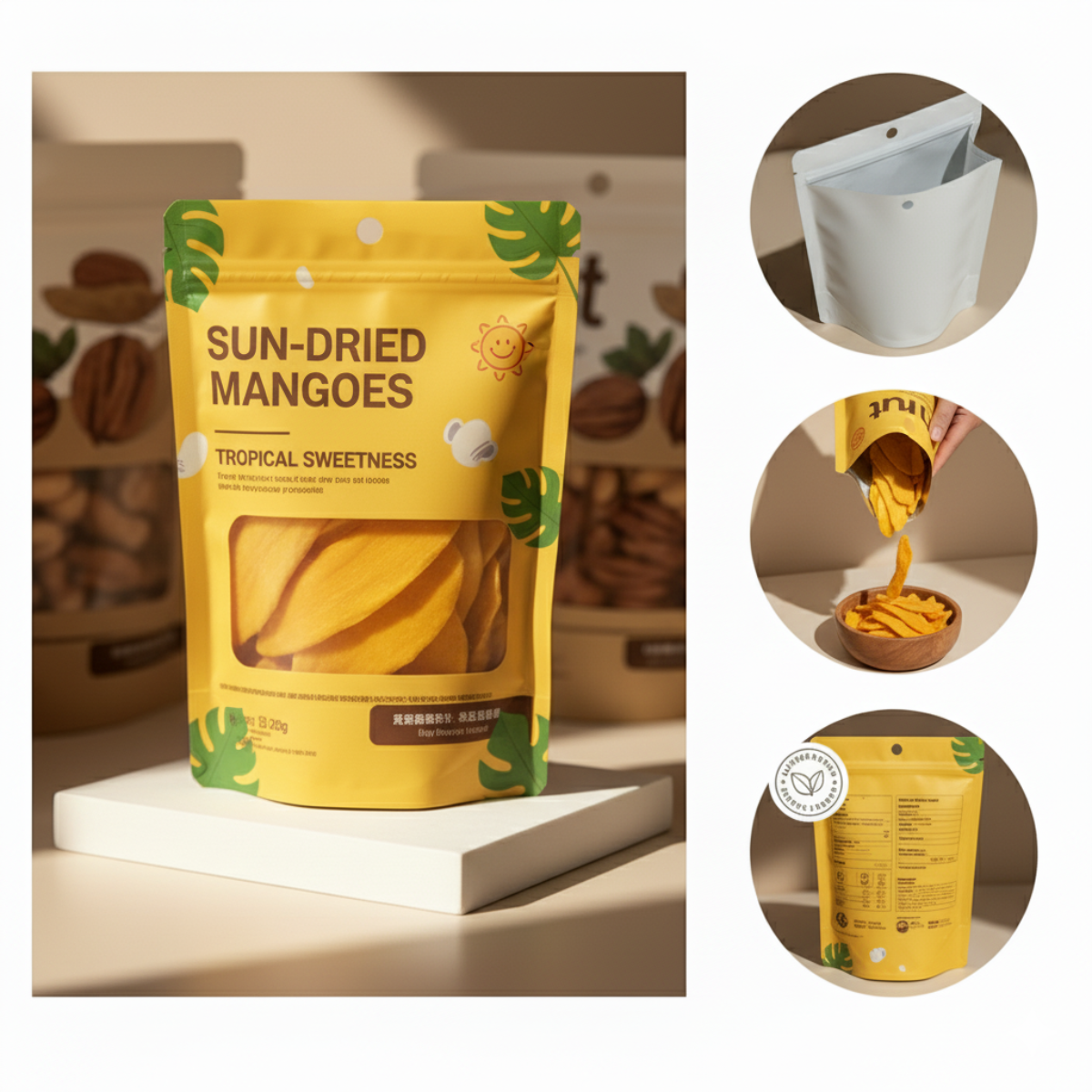
For businesses operating in retail, wholesale, or e-commerce distribution, longer shelf life means fewer urgent markdowns, reduced pressure on logistics timelines, and greater flexibility in inventory management. Food packaging bags that incorporate resealable closures add another layer of protection after the initial opening, allowing consumers to preserve product quality across multiple uses rather than discarding partially used contents.
The cumulative effect of extended shelf life across an entire product line can represent a significant reduction in total food waste. Businesses that proactively choose food packaging bags designed for barrier performance and resealability are making a structural investment in waste prevention rather than responding reactively to spoilage after the fact.
Resealable and Functional Design Features That Prevent Waste
The Role of Resealable Closures in Consumer-Level Waste Reduction
Resealable food packaging bags have transformed the way consumers interact with packaged goods, and this behavioral shift has meaningful implications for waste reduction at the business level. When consumers can reseal a package and maintain product freshness between uses, they are far less likely to discard partially consumed products. This reduces the volume of product that ends up as household waste while simultaneously reinforcing positive brand perception.
For businesses, the benefit extends beyond consumer goodwill. Fewer complaints about stale or degraded products translate into fewer returns, replacement shipments, and customer service costs. Food packaging bags with reliable resealable mechanisms — such as ziplock closures or press-to-seal strips — provide a functional promise to the consumer that supports repeat purchasing behavior and reduces downstream waste in the consumption cycle.
Choosing food packaging bags with high-quality resealable features also supports businesses in reducing over-packaging. Rather than defaulting to smaller single-use formats to minimize spoilage risk, brands can confidently offer larger sizes with resealable closures, reducing the total amount of packaging material used per unit of product sold. This is a meaningful contribution to both operational efficiency and environmental sustainability goals.
Waterproof and Moisture-Barrier Features That Protect Product Integrity
Moisture is one of the primary causes of food spoilage, particularly for dry goods such as nuts, seeds, dried fruits, cereals, and snack products. High-quality food packaging bags designed with waterproof and moisture-barrier properties create a critical line of defense against the humidity fluctuations that occur throughout storage and transportation. Without adequate moisture resistance, these products can clump, mold, or develop off-flavors that make them unsellable.
Businesses operating in regions with high ambient humidity, or those exporting products across varying climate zones, face elevated spoilage risks when using food packaging bags without sufficient moisture protection. The financial impact of humidity-related spoilage is often underreported but can be substantial when aggregated across a product range and distribution network. High-quality food packaging bags with verified moisture-barrier ratings give businesses the confidence to ship and store products across diverse conditions without sacrificing quality.
Beyond the direct product protection benefits, moisture-resistant food packaging bags also reduce the risk of secondary packaging contamination, where moisture from one compromised package affects surrounding products in storage. This spillover effect can multiply losses significantly in warehouse or retail environments. Investing in high-specification food packaging bags is therefore a systemic waste-prevention measure, not just a product-level one.
Operational Efficiency Gains Linked to Better Packaging Choices
Reducing Return Rates and Downstream Logistics Waste
Product returns are one of the most resource-intensive forms of waste in the food industry. When customers return products due to packaging failures — broken seals, damaged bags, or compromised freshness — businesses absorb the full cost of shipping, handling, restocking or disposal, and customer service. Each return represents not only a financial loss but also a waste of the fuel, packaging, and labor invested in the original order fulfillment cycle.
High-quality food packaging bags that are structurally robust, reliably sealed, and designed for the physical demands of shipping and handling substantially reduce the rate of transit-related damage and integrity failures. This means fewer returns, fewer replacement shipments, and less packaging material consumed in rework cycles. The operational savings compound over time, particularly for businesses with high order volumes or complex distribution networks.
Businesses that document and analyze their return rates often find that upgrading to better food packaging bags produces one of the fastest and most measurable reductions in operational waste. This is a concrete, data-driven argument for investing in packaging quality rather than defaulting to the lowest-cost option, which frequently generates higher total costs through the waste and returns it enables.
Streamlining Packaging Processes to Minimize Material Waste
Beyond product protection, the efficiency of the packaging process itself affects overall material waste. Food packaging bags that are poorly designed for machine filling, sealing, or labeling tend to generate higher rates of reject bags, misaligned seals, and wasted packaging materials during production runs. These inefficiencies are a form of operational waste that increases material consumption without delivering corresponding value.
High-quality food packaging bags are typically engineered with consistent dimensions, reliable material thickness, and predictable sealing behavior that supports efficient integration into automated packaging lines. This consistency reduces machine downtime, lowers reject rates, and decreases the volume of packaging material discarded during production. For high-volume food producers, these operational gains can translate into significant material and cost savings over time.
Standardized, high-quality food packaging bags also simplify inventory management and reduce the complexity of managing multiple packaging SKUs. Businesses that consolidate around a reliable, high-performing bag format can reduce warehouse space requirements, minimize overstocking, and avoid the waste associated with obsolete or damaged packaging materials that sit unused in storage.
Sustainability and Brand Positioning Through Responsible Packaging
Meeting Consumer and Regulatory Expectations on Packaging Waste
Consumer awareness around packaging waste has grown significantly in recent years, and this shift in expectations is creating real commercial pressure on food businesses to demonstrate responsible packaging practices. Choosing high-quality food packaging bags that are designed for durability, product preservation, and reduced environmental impact is increasingly a brand differentiator rather than simply a compliance requirement.
Regulatory frameworks in many markets are also tightening around packaging waste, requiring businesses to meet minimum recycled content thresholds, reduce single-use plastic use, or demonstrate compliance with extended producer responsibility schemes. High-quality food packaging bags that are designed with these requirements in mind help businesses stay ahead of regulatory change while reducing the operational disruption that reactive compliance typically creates.
Businesses that proactively communicate their commitment to better food packaging bags — particularly those that extend product life, reduce over-packaging, and minimize material waste — are better positioned to attract environmentally conscious buyers and retail partners. This is a tangible commercial return on the investment in packaging quality that extends well beyond the operational benefits of waste reduction alone.
Choosing Food-Grade Materials That Align With Waste-Reduction Goals
Not all food packaging bags are created equal in terms of their environmental footprint or their practical contribution to waste reduction. Food-grade materials that are certified safe for direct food contact, tested for barrier performance, and designed for longevity in storage conditions are fundamentally better investments than lower-cost alternatives that fail faster and generate more waste per product cycle.
Businesses making procurement decisions about food packaging bags should prioritize material specifications that align with their specific product requirements — whether that means multilayer barrier films for oxygen-sensitive products, waterproof exteriors for moisture-prone environments, or resealable closures for retail-facing applications. Aligning material choice with application need is the foundation of a waste-reduction packaging strategy.
The long-term perspective here is important: food packaging bags that perform reliably across their intended service life generate less total waste than cheaper bags that fail prematurely and require replacement. This lifecycle view of packaging performance is essential for businesses that are serious about reducing waste as a structural operational goal rather than a short-term cost-cutting exercise.
FAQ
How do high-quality food packaging bags reduce product spoilage?
High-quality food packaging bags use advanced barrier materials and reliable sealing technologies to prevent oxygen, moisture, and contaminants from reaching the product. This significantly slows the spoilage process, extends shelf life, and reduces the volume of product that must be discarded due to degradation. The result is less food waste, fewer write-offs, and lower disposal costs for businesses across the food supply chain.
What features should businesses look for in food packaging bags to minimize waste?
Businesses focused on waste reduction should prioritize food packaging bags with strong moisture and oxygen barrier properties, reliable and tamper-evident seals, resealable closures for consumer-facing products, and food-grade material certifications. Structural durability during transit and compatibility with automated filling and sealing equipment are also important factors that reduce operational waste during the packaging process itself.
Can resealable food packaging bags make a meaningful difference in consumer waste?
Yes. Resealable food packaging bags allow consumers to preserve product freshness after the initial opening, which directly reduces the likelihood of partially used products being discarded prematurely. For businesses, this translates into fewer returns and complaints related to stale or degraded products, while also supporting consumer satisfaction and repeat purchase behavior. The waste-reduction impact is felt across both the business and consumer levels.
How does investing in better food packaging bags affect overall business costs?
While high-quality food packaging bags may carry a higher upfront unit cost compared to lower-grade alternatives, they typically generate significant savings through reduced product spoilage, fewer returns, lower disposal costs, and less operational waste during production. When businesses calculate the total cost of packaging — including the downstream costs of waste and returns — investing in quality food packaging bags consistently demonstrates a favorable return on investment.
Table of Contents
- The Direct Link Between Packaging Quality and Product Waste
- Resealable and Functional Design Features That Prevent Waste
- Operational Efficiency Gains Linked to Better Packaging Choices
- Sustainability and Brand Positioning Through Responsible Packaging
-
FAQ
- How do high-quality food packaging bags reduce product spoilage?
- What features should businesses look for in food packaging bags to minimize waste?
- Can resealable food packaging bags make a meaningful difference in consumer waste?
- How does investing in better food packaging bags affect overall business costs?