EN
EN

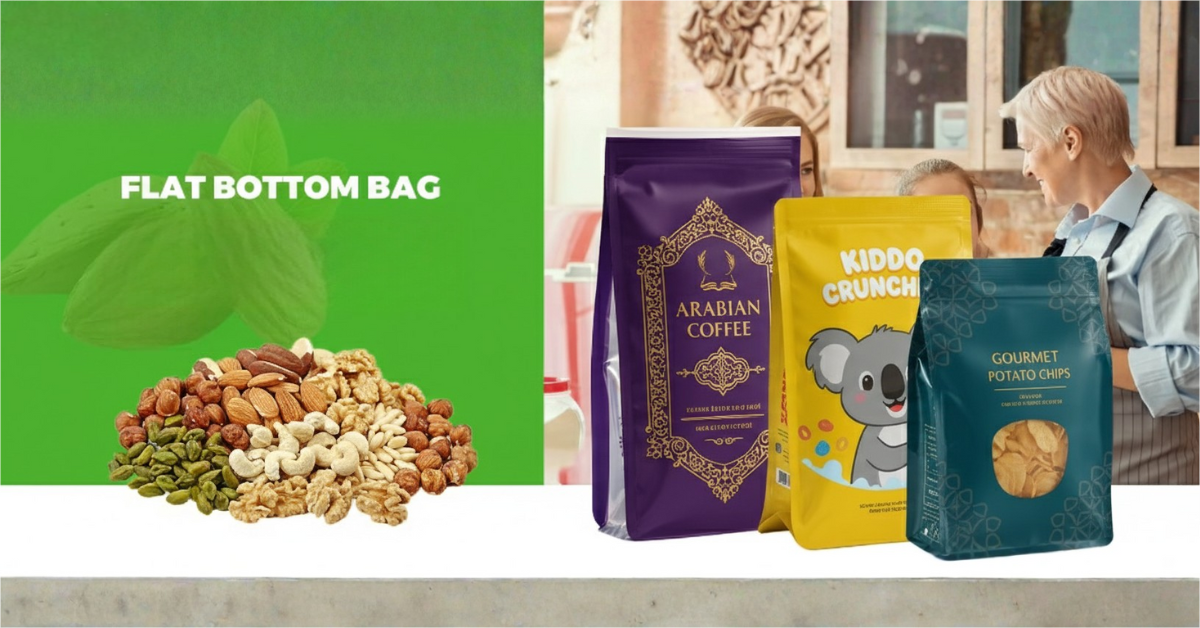
When sourcing at scale, B2B buyers quickly discover that not all food packaging bags are created equal. The difference between a generic off-the-shelf bag and a fully customized solution can directly impact shelf appeal, product freshness, brand recognition, and ultimately, customer retention. For procurement managers, category buyers, and private-label brands, understanding the full range of customization options available for food packaging bags is not just a sourcing exercise — it is a strategic business decision that touches marketing, compliance, logistics, and product quality simultaneously.
This article breaks down the key customization dimensions available in B2B procurement of food packaging bags, including material selection, structural design, closure systems, printing and branding, and compliance-related configurations. Whether you are sourcing bags for nuts, dried fruits, snacks, coffee, or other food categories, the customization framework presented here will help you align supplier conversations with your product requirements and brand goals more efficiently.
Material Customization in Food Packaging Bags
Choosing the Right Laminate Structure
The material composition of food packaging bags is one of the most foundational customization decisions in B2B procurement. Most modern food packaging bags are constructed using multi-layer laminate structures, where each layer serves a specific functional purpose — whether that is moisture resistance, oxygen barrier performance, puncture resistance, or heat sealability. Common laminate combinations include PET/PE, BOPP/PE, PET/AL/PE, and kraft paper/PE configurations, each suited to different food categories and shelf-life requirements.
For dry goods such as nuts, seeds, and dried fruits, laminate structures with high moisture vapor transmission rate (MVTR) resistance are critical. For products with high fat content, oxygen barrier layers become a priority to prevent oxidative rancidity. When procuring food packaging bags in volume, specifying the exact laminate structure rather than accepting a generic standard ensures that the bags are engineered to match the actual preservation needs of your product, not just the most commonly available format.
Procurement teams should also consider whether food-safe, food-grade certified materials are required for regulatory compliance in their target markets. Suppliers offering food packaging bags at an industrial scale should be able to provide material compliance documentation such as FDA, EU Regulation 10/2011, or equivalent certifications depending on destination markets. Confirming this early avoids costly reformulation or replacement later in the sourcing cycle.
Sustainable and Specialty Material Options
Increasingly, B2B buyers are requesting food packaging bags made from sustainable or specialty materials as part of their corporate sustainability mandates or retail partner requirements. These options include recyclable mono-material structures such as all-PE or all-PP laminates, compostable films derived from PLA or PBAT compounds, and partially bio-based plastics that reduce dependence on virgin petroleum feedstocks. While these materials often come at a cost premium compared to conventional laminates, they can provide a meaningful competitive advantage in markets where environmental labeling matters to end consumers.
Kraft paper-based food packaging bags represent another specialty option popular in premium food segments, particularly for artisan snacks, coffee, and organic products. These bags combine the visual warmth of paper with inner PE or PLA liners that maintain moisture resistance. When selecting sustainable materials for food packaging bags, procurement managers should balance environmental credentials with practical performance metrics such as seal integrity, print quality, and supply chain durability to ensure the bags perform reliably across the entire distribution journey.
Structural and Format Customization
Bag Styles and Their B2B Suitability
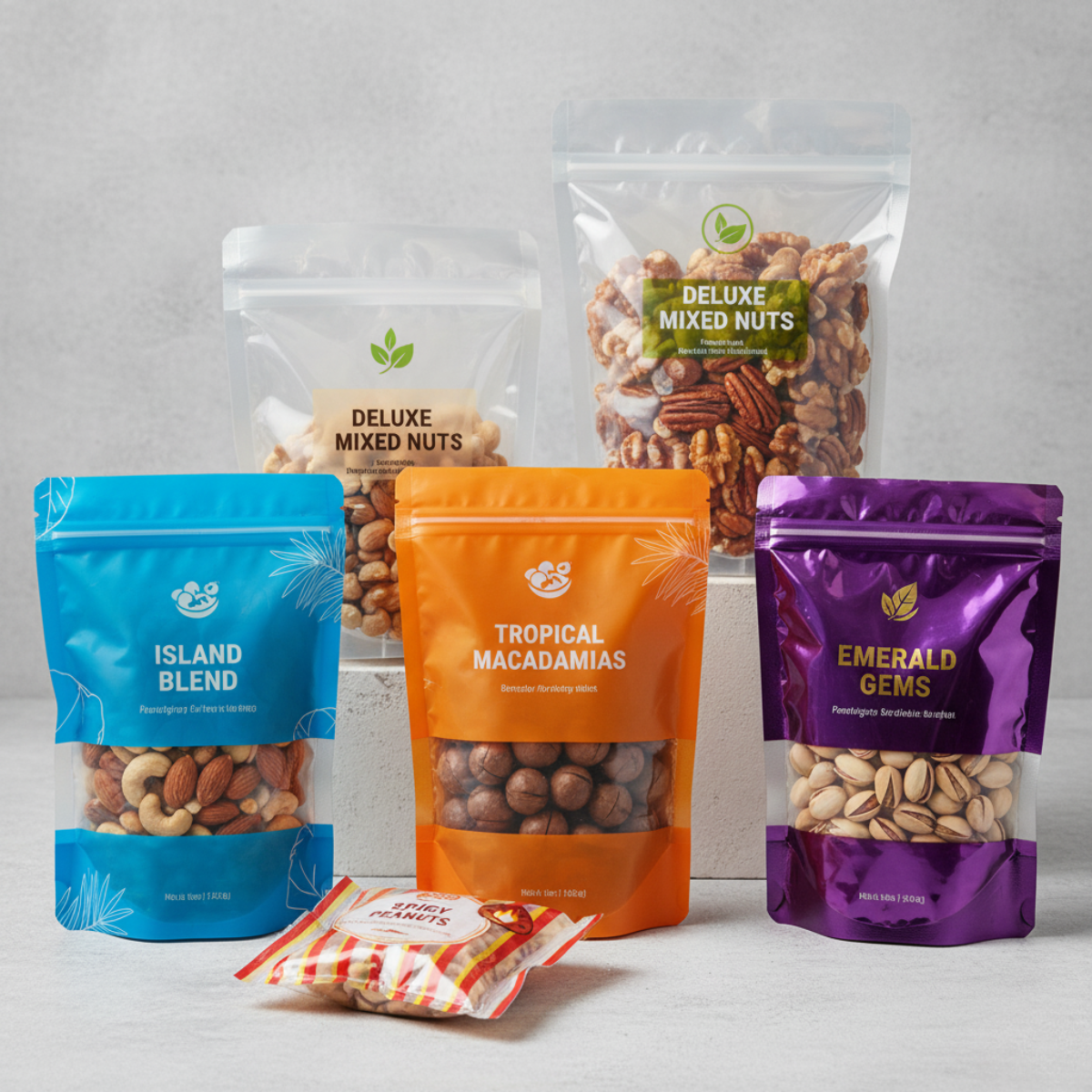
The structural format of food packaging bags is a customization dimension that directly affects how products are displayed, stored, and consumed. Stand-up pouches, also called Doypack bags, are among the most widely procured food packaging bags in B2B channels because they offer excellent shelf presence, structural stability when filled, and strong compatibility with automatic form-fill-seal (FFS) packaging lines. Their flat bottom gusset allows the bag to stand upright on retail shelves, reducing the need for secondary display fixtures.
Flat pouches and pillow bags remain relevant for food packaging bags used in secondary packaging, multi-pack configurations, or cost-sensitive volume applications. Side-gusset bags, commonly used for coffee and larger dry goods, offer expanded volume capacity while maintaining a compact flat profile when empty, which reduces storage and shipping costs. Three-side seal pouches suit smaller portion packs and condiment sachets. Each structural format comes with distinct tooling, fill-rate compatibility, and minimum order quantity considerations that should be addressed during early procurement discussions.
For B2B buyers evaluating food packaging bags for production-line integration, it is important to specify not only the bag style but also the dimensional tolerances, gusset depths, and heat seal margins required to ensure compatibility with existing filling equipment. Misalignment between bag format and filling machinery is one of the most common — and costly — oversights in procurement planning for food packaging bags at industrial scale.
Closure Systems and Functional Features
Closure systems are a high-impact customization category for food packaging bags because they directly influence consumer convenience, product freshness after opening, and brand perception. Resealable zipper closures are among the most commonly requested features in food packaging bags procured for retail distribution. Press-to-close zippers, slider zippers, and child-resistant zippers each serve different market requirements and price points, with slider variants commanding a premium due to their ease of use for older or mobility-limited consumers.
Tear notches, hang holes, and euro slots are smaller structural customizations that can significantly affect retail merchandising for food packaging bags. Tear notches enable clean, controlled opening without scissors, improving consumer experience for first use. Hang holes and euro slots allow bags to be merchandised on peg hooks rather than shelves, expanding retail placement options without requiring additional packaging. Valve features, including degassing valves for freshly roasted coffee, represent another functional addition that protects product quality while maintaining bag integrity.
When specifying closure systems for food packaging bags in B2B procurement, buyers should confirm the mechanical durability of zippers across temperature ranges, the compatibility of valve sizes with packaging line requirements, and whether functional features require incremental tooling charges that affect total landed cost calculations. These details often only emerge during sample evaluation but should ideally be clarified in the request-for-quotation (RFQ) stage to avoid delays.
Printing and Branding Customization
Print Technologies for Food Packaging Bags
Printed branding is perhaps the most visible customization dimension in food packaging bags and often the one that receives the most attention in B2B procurement discussions. The two dominant print technologies used for food packaging bags at commercial volumes are rotogravure printing and flexographic printing. Rotogravure printing delivers exceptional color consistency, sharp fine-line reproduction, and suitability for high-volume long runs, making it the preferred choice for established brands procuring food packaging bags in large quantities. Flexographic printing offers faster plate turnaround and lower setup costs, making it more accessible for mid-volume buyers or brands with frequent SKU rotations.
Digital printing is an emerging technology increasingly available for food packaging bags, particularly for short runs, market tests, and seasonal promotional variants. While per-unit costs are higher than gravure or flexo for large volumes, digital printing eliminates plate charges entirely and enables variable data printing, which is useful for region-specific compliance labeling or personalized packaging campaigns. Procurement teams managing diverse SKU portfolios or frequent product launches may find digital printing for food packaging bags offers meaningful operational flexibility that offsets its higher unit cost.
Surface Finishes and Visual Differentiation
Beyond the core print technology, surface finish customization can significantly elevate the visual and tactile quality of food packaging bags. Matte lamination provides a contemporary, premium feel that diffuses light and reduces glare, making colors appear rich and deep. Glossy lamination, by contrast, intensifies color saturation and creates high-visibility shelf impact under retail lighting. Soft-touch matte coatings add a velvety texture that reinforces premium positioning and creates a memorable unboxing sensation, particularly relevant for gift-oriented food products.
Metallized finishes and transparent windows are two additional visual customization options that are frequently specified for food packaging bags in competitive retail categories. Metallized films create a reflective, premium appearance particularly associated with coffee, tea, and snack categories. Transparent windows, whether full-face, bottom, or shaped, allow consumers to view the product directly, which builds purchase confidence for high-quality visually appealing goods like nuts, dried fruits, and artisan snacks. When specifying window dimensions on food packaging bags, buyers should confirm that windowed areas do not compromise structural seal zones or barrier performance.
Compliance and Labeling Customization
Regulatory Labeling Requirements by Market
For B2B buyers distributing food packaging bags across multiple markets, regulatory compliance customization is a non-negotiable requirement that must be built into procurement specifications from the outset. Different markets require different mandatory labeling elements on food packaging bags, including ingredient declarations, nutritional panels, allergen statements, country-of-origin labels, and certification marks such as halal, kosher, organic, or non-GMO. Failure to accommodate these requirements in the bag design phase typically results in costly redesigns, reprints, or regulatory holds at import points of entry.
Working closely with suppliers experienced in multi-market food packaging bags is particularly valuable here, as they can often advise on label area allocation, minimum font size requirements for print compliance, and placement conventions for mandatory information. Procurement teams should request that label layout proofs for food packaging bags include compliance annotations showing which elements satisfy which regulatory requirements, creating a documented audit trail for internal quality assurance purposes. This practice is especially important in regulated categories such as health foods, organic products, and items targeting children.
Private Label and Co-Branding Configurations
Many B2B buyers procuring food packaging bags are sourcing for private label programs rather than a single proprietary brand. Private label configurations require that food packaging bags be customizable to carry the buyer's brand identity without any visible supplier branding, while also meeting the specific visual and regulatory standards set by the retail partner. This places additional customization demands on suppliers, who must manage brand-separated print runs, maintain confidentiality around design assets, and often accommodate shorter lead times driven by retail promotional calendars.
Co-branding configurations, where food packaging bags carry both a manufacturer brand and a retail partner's identity, introduce further complexity around logo placement hierarchy, color matching between brand standards, and approval workflows. B2B procurement teams managing co-branded food packaging bags should establish clear internal approval processes and supplier communication protocols to prevent version control errors from reaching production. Requesting physical pre-production samples for color and structural sign-off before full production runs is a critical risk management step for customized food packaging bags at scale.
Minimum Order Quantities and Lead Time Planning
Balancing Customization Depth with MOQ Realities
One of the practical realities of customizing food packaging bags in B2B procurement is that the depth of customization often correlates directly with minimum order quantity (MOQ) thresholds. Fully custom food packaging bags — with unique laminates, bespoke closures, proprietary print plates, and surface finishes — typically require higher MOQs to justify the tooling investment, plate setup costs, and production scheduling complexity involved. For smaller-volume buyers, this can create tension between the desire for differentiation and the capital constraint of committing to large inventory positions upfront.
Procurement teams managing this tension effectively often adopt a tiered customization approach: investing in full customization for top-volume SKUs where differentiation has the highest commercial impact, while using semi-customized or stock food packaging bags for lower-volume variants or new product launches in test phases. This approach preserves brand quality where it matters most while managing inventory risk across the broader product range. Discussing MOQ flexibility with suppliers during the negotiation phase — particularly for growing accounts — can sometimes yield more favorable minimum order arrangements for custom food packaging bags.
Lead Time Considerations for Custom Orders
Lead time management is closely linked to customization planning for food packaging bags in B2B supply chains. Custom food packaging bags involving new laminate structures, plate production for multi-color printing, or new closure tooling typically require longer lead times than repeat orders of established specifications. Standard industry lead times for first-run custom food packaging bags range from four to twelve weeks depending on supplier location, print complexity, and material sourcing timelines. Building these lead times into procurement calendars — particularly for seasonal product launches or new market entries — is essential to avoid supply disruptions.
Buyers can reduce effective lead times for custom food packaging bags by pre-approving artwork files before material procurement begins, establishing safety stock policies for high-velocity SKUs, and working with suppliers who maintain pre-laminated film inventory for commonly specified structures. Some suppliers offering food packaging bags at scale also offer pre-made blanks that can be quickly printed and converted, reducing lead times for buyers who need speed to market without full bespoke production timelines. Aligning these lead time optimization strategies with your overall procurement calendar significantly reduces the risk of packaging shortfalls during peak demand periods.
FAQ
What are the most important customization decisions when procuring food packaging bags for the first time?
The most critical decisions for first-time buyers of custom food packaging bags are material laminate structure, bag format, and print specification. These three dimensions shape the bag's core performance, visual identity, and compatibility with filling equipment. Getting these right from the start avoids costly tooling changes or reprint expenses later. Consulting with a supplier experienced in food packaging bags before finalizing specifications is strongly recommended to ensure all functional and regulatory requirements are addressed upfront.
How does resealable zipper customization affect the cost of food packaging bags?
Resealable zippers add a measurable cost increment to food packaging bags, with press-to-close zippers being the most economical option and slider zippers carrying a higher per-unit cost. The exact cost impact depends on zipper gauge, material compatibility with the laminate structure, and whether the zipper is heat-sealed at the supplier's facility or installed inline during filling. For most retail food applications, the consumer convenience and product freshness benefits of resealable food packaging bags justify the cost premium, particularly for products sold in multi-use portion formats like nuts, trail mix, or dried fruit.
Can food packaging bags be customized for both retail and foodservice channels simultaneously?
Yes, food packaging bags can be configured to serve both retail and foodservice needs, though the two channels often require distinct specifications. Retail-facing food packaging bags typically prioritize branding, consumer-facing labeling, and shelf presence features like stand-up formats and resealable closures. Foodservice food packaging bags often prioritize bulk fill capacity, ease of portioning, durability in commercial kitchen environments, and cost efficiency over visual branding. Buyers serving both channels often maintain separate SKU specifications for food packaging bags, occasionally sharing a common laminate structure across both variants to consolidate supplier relationships and reduce material complexity.
What certifications should suppliers of food packaging bags be able to provide?
Reputable suppliers of food packaging bags should be able to provide material safety documentation confirming compliance with applicable food contact regulations such as FDA 21 CFR, EU Regulation No. 10/2011, or equivalent national standards in the target market. Production facility certifications such as ISO 9001 for quality management, BRC Packaging, or FSSC 22000 provide additional assurance of manufacturing process reliability. For specific product categories, additional certifications such as organic-compliant packaging, halal-certified materials, or compostable material certifications (e.g., EN 13432 or ASTM D6400) may be required. Procurement teams should request and verify these documents before approving food packaging bags for production.
Table of Contents
- Material Customization in Food Packaging Bags
- Structural and Format Customization
- Printing and Branding Customization
- Compliance and Labeling Customization
- Minimum Order Quantities and Lead Time Planning
-
FAQ
- What are the most important customization decisions when procuring food packaging bags for the first time?
- How does resealable zipper customization affect the cost of food packaging bags?
- Can food packaging bags be customized for both retail and foodservice channels simultaneously?
- What certifications should suppliers of food packaging bags be able to provide?