EN
EN

Introduction
Product shelf life is a critical concern for manufacturers, food processors, distributors, retailers, and other businesses involved in product packaging. When products lose freshness, quality, or usability before reaching the end customer, businesses may face increased waste, customer complaints, product returns, and financial losses.
Plastic packaging bags can help improve product shelf life by creating a protective barrier between the packaged product and external environmental conditions. Depending on the material structure, sealing method, and application, plastic bags can reduce exposure to moisture, oxygen, light, dust, microorganisms, and physical damage.
However, not all plastic packaging bags provide the same level of protection. The right packaging solution must be selected according to the product’s characteristics, storage conditions, transportation requirements, and expected shelf life. For B2B buyers, understanding how packaging design influences product stability is essential for making reliable procurement decisions.
1. How Plastic Packaging Bags Protect Products
Plastic packaging bags are designed to control the environment surrounding a product. Once properly filled and sealed, they can limit the movement of air, moisture, and contaminants.
The main protective functions include:
- Reducing moisture absorption or moisture loss
- Limiting oxygen exposure
- Protecting against dust and external contamination
- Reducing light exposure when suitable materials are used
- Preventing product leakage
- Minimizing physical damage during handling and transportation
- Supporting controlled packaging conditions
These functions are especially important for food, pet food, agricultural products, chemicals, powders, and other goods that may deteriorate when exposed to unsuitable environmental conditions.
The effectiveness of a plastic packaging bag depends on its film structure, thickness, barrier properties, sealing quality, and compatibility with the packaged product.
2. Moisture Barrier Protection
Moisture is one of the most common causes of product deterioration. Excessive humidity can lead to clumping, mold growth, texture changes, corrosion, and reduced product performance. In other cases, moisture loss can cause products to become dry, brittle, or less appealing.
Plastic packaging bags can help control moisture transfer by using films with suitable water vapor barrier properties.
For example, moisture-resistant packaging can be useful for:
- Snack foods
- Powdered food ingredients
- Pet food
- Bakery products
- Agricultural seeds
- Pharmaceutical-related packaging
- Industrial powders
- Hygroscopic materials
For products that must remain dry, packaging buyers should evaluate the water vapor transmission rate of the selected film structure. A lower transmission rate generally indicates stronger resistance to moisture movement under specified testing conditions.
However, moisture protection is not determined by the film alone. Poor sealing, pinholes, damaged corners, and improper storage can reduce the overall performance of the package.
3. Oxygen Barrier and Oxidation Control
Oxygen can cause oxidation, which may negatively affect food flavor, color, aroma, texture, and nutritional quality. It can also contribute to the deterioration of oils, fats, and other oxygen-sensitive ingredients.
Plastic packaging bags with oxygen barrier layers can reduce the amount of oxygen entering the package. Depending on the application, manufacturers may use multilayer structures that combine strength, sealability, printability, and barrier performance.
Common barrier materials may include:
- PET
- PE
- PA or nylon
- EVOH
- Aluminum foil
- Metallized films
Each material provides different performance characteristics. For example, polyethylene is often used for sealing and flexibility, while other layers may be added to improve oxygen, moisture, or light protection.
For coffee, snacks, meat products, nuts, and other oxidation-sensitive goods, buyers should discuss oxygen barrier requirements with the packaging supplier. The correct structure may help maintain product quality for a longer period compared with a basic single-layer bag.
4. Light Protection for Sensitive Products
Light exposure can cause color fading, oxidation, nutrient degradation, and changes in product appearance. Some products are particularly sensitive to ultraviolet or visible light.
Plastic packaging bags can be designed with opaque, metallized, or aluminum foil layers to reduce light transmission.
Light-protective packaging may be suitable for:
- Coffee and tea
- Oils and fats
- Certain food ingredients
- Nutritional powders
- Agricultural products
- Light-sensitive chemicals
- Specialty industrial materials
The required level of light protection depends on the product formula and storage environment. A fully opaque bag may be appropriate for highly light-sensitive products, while a transparent bag may be preferred when product visibility is an important sales or inspection requirement.
B2B buyers should balance protection and visibility instead of choosing packaging based only on appearance.
5. Improved Sealing Helps Prevent Contamination
Even when a plastic film has strong barrier properties, the package may fail if it is not sealed correctly. Weak seals, incomplete seals, wrinkles, and contamination in the sealing area can allow air, moisture, or contaminants to enter.
A properly designed plastic packaging bag should provide:
- Consistent seal strength
- Reliable heat-sealing performance
- Suitable seal width
- Resistance to leakage
- Compatibility with filling equipment
- Stable performance during transportation
For high-volume production, packaging suppliers should consider the customer’s filling and sealing machines. A bag that performs well during manual packing may not perform equally well on an automatic packaging line.
Packaging buyers should request seal strength data, leakage testing information, and production samples when evaluating a supplier. These checks can help reduce packaging failure during commercial production.
6. Vacuum Packaging Can Reduce Air Exposure
Vacuum packaging bags are designed to remove much of the air from inside the package before sealing. This can reduce oxygen exposure and help limit the space available for oxidation and certain forms of product deterioration.
Vacuum packaging is commonly used for:
- Meat and seafood
- Cheese
- Processed foods
- Coffee products
- Certain industrial components
- Products requiring compact packaging
The effectiveness of vacuum packaging depends on the product, film structure, vacuum level, sealing process, and storage temperature.
Vacuum packaging should not be treated as a replacement for appropriate refrigeration, sanitation, or other required preservation methods. Instead, it is one part of a complete packaging and storage system.
For commercial buyers, it is important to confirm that the bags are suitable for the intended vacuum equipment and that they can resist punctures caused by sharp bones, edges, or hard product pieces.
7. Multilayer Films Provide Customized Protection
Different products require different levels of protection. A single plastic material may not provide all the required functions, so multilayer films are often used to combine several performance characteristics.
A multilayer plastic packaging bag may provide:
- An outer layer for printing and abrasion resistance
- A barrier layer for oxygen, moisture, or light protection
- An inner layer for product contact and heat sealing
- Additional strength for transportation and handling
For example, a food packaging bag may require both a strong outer structure and a reliable inner sealing layer. A retort pouch may require a structure that can withstand high-temperature processing, while a frozen food bag may need flexibility and resistance to low temperatures.
The appropriate structure should be selected based on:
- Product type
- Product weight
- Filling temperature
- Storage temperature
- Processing conditions
- Required shelf life
- Transportation distance
- Packaging equipment
- Destination market requirements
A professional packaging manufacturer can help buyers compare different film combinations and identify a structure that balances performance and cost.
8. Strong Packaging Reduces Physical Damage
Physical damage can shorten product shelf life even when the packaging has good barrier properties. Punctures, tears, abrasion, and broken seals may expose the product to air, moisture, and contamination.
Plastic packaging bags can improve product protection through suitable:
- Film thickness
- Tear resistance
- Puncture resistance
- Tensile strength
- Flexibility
- Seal strength
- Bag shape and dimensions
For products with sharp edges or high density, a thin film may not be sufficient. Heavy-duty packaging may be necessary for industrial materials, frozen products, pet food, and large-volume goods.
Packaging design should also consider the distribution environment. Products transported over long distances may experience vibration, stacking pressure, temperature changes, and repeated handling. Strong packaging can help reduce damage throughout the supply chain.
9. Packaging Design Supports Better Product Stability
The design of a plastic packaging bag can influence how well the product remains stable during storage and distribution.
Important design options may include:
Stand-Up Pouches
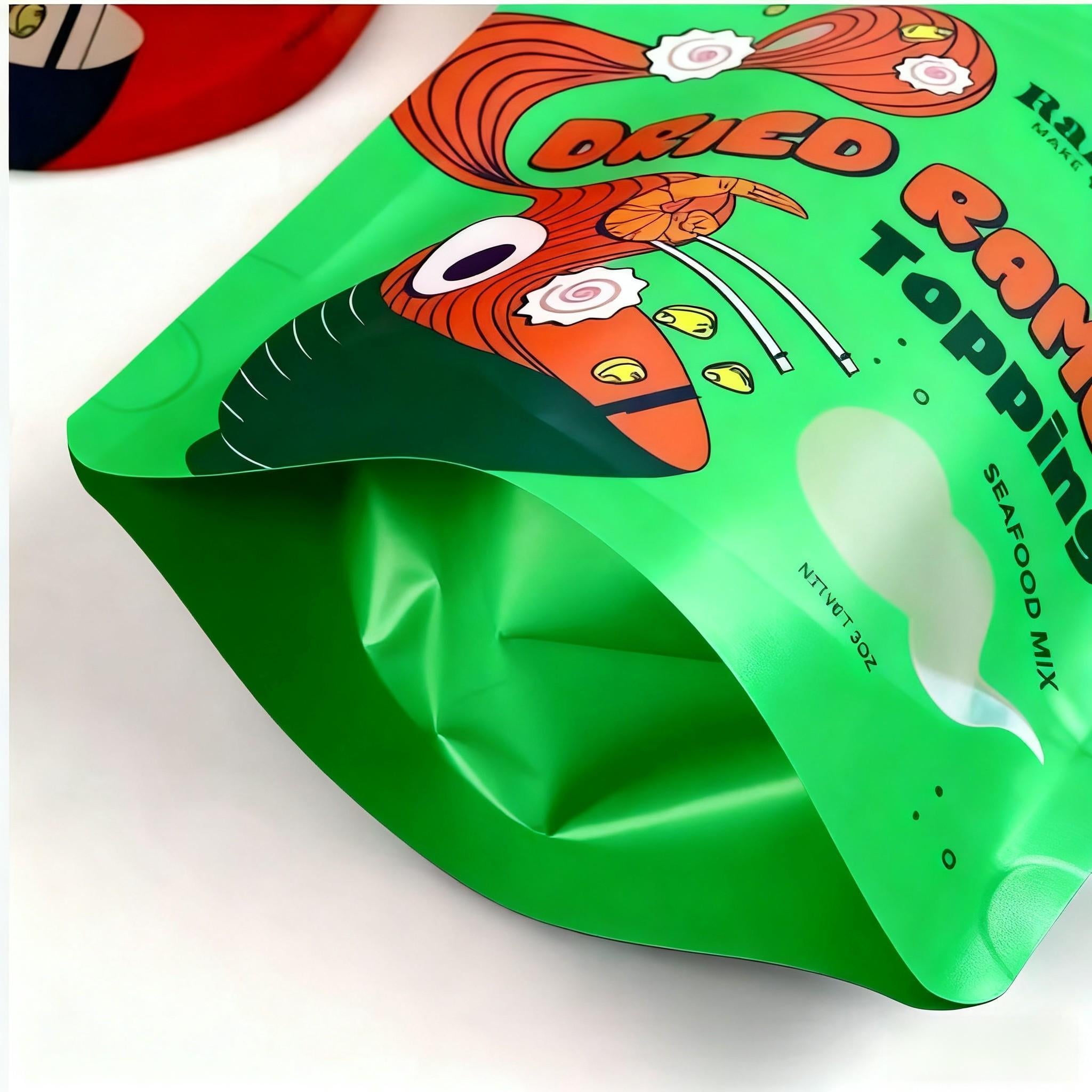
Stand-up pouches provide a stable package format and can be designed with zipper closures, spouts, handles, or high-barrier layers. They are commonly used for food, pet food, sauces, and household products.
Flat Bags
Flat bags are often suitable for lightweight products, inner packaging, and applications where efficient storage is important.
Zipper Bags
Resealable zipper bags can help protect products after the package is opened. They may be useful for snacks, pet treats, dry ingredients, and other products consumed in multiple portions.
Vacuum Bags
Vacuum bags are designed for air removal and sealed storage. They are often selected for products that require reduced oxygen exposure.
Retort Pouches
Retort pouches are designed for certain heat-processing applications. They require carefully selected materials and manufacturing processes to withstand the intended treatment conditions.
The packaging format should match the product’s use cycle. If customers repeatedly open and close the package, a resealable design may provide better protection after opening than a standard sealed bag.
10. Resealable Packaging Helps After Opening
Many products do not get consumed immediately after opening. Once the original seal is broken, the product may be exposed to air, humidity, dust, and handling.
Resealable plastic packaging bags can help maintain product quality during repeated use. Zippers, sliders, spouts, and other closure systems may reduce exposure after opening.
Resealable packaging can be useful for:
- Pet food
- Snacks
- Coffee
- Tea
- Baking ingredients
- Dried fruit
- Powdered products
- Household products
The closure system should be selected according to the product’s weight, texture, oil content, and expected frequency of use. A zipper suitable for dry snacks may not be appropriate for liquid or high-viscosity products.
For B2B procurement, buyers should evaluate closure durability, ease of use, sealing consistency, and compatibility with the package structure.
11. Proper Packaging Can Reduce Product Waste
When packaging helps maintain product quality, businesses may experience lower levels of waste during storage and distribution.
Improved packaging protection can help reduce:
- Spoilage
- Moisture-related damage
- Oxidation
- Leakage
- Product contamination
- Transportation damage
- Customer complaints
- Unsellable inventory
For manufacturers and distributors, the cost of packaging should be evaluated together with the potential cost of product loss. A lower-cost bag may not be the most economical choice if it leads to higher damage rates or shorter usable shelf life.
A more suitable packaging structure may increase unit packaging cost while reducing total supply chain costs. Buyers should therefore consider the complete cost of ownership rather than focusing only on the purchase price per bag.
12. Packaging Must Match Storage and Transportation Conditions
Plastic packaging bags cannot compensate for unsuitable storage conditions. Temperature, humidity, sunlight, handling, and transportation time all influence product stability.
For example:
- Frozen products may require films that remain flexible at low temperatures.
- Heat-sensitive products may require protection from high temperatures.
- Moisture-sensitive products may require stronger water vapor barriers.
- Long-distance exports may require improved puncture and seal strength.
- Products stored outdoors may require stronger light protection.
- High-value products may require tamper-evident or additional protective packaging.
Packaging suppliers should understand the full distribution process before recommending a bag structure.
B2B buyers should provide information such as:
- Product name and composition
- Product weight
- Filling method
- Filling temperature
- Storage temperature
- Expected shelf life
- Transportation route
- Packaging machine type
- Required printing and branding
- Destination country
This information helps the supplier recommend a more suitable packaging solution.
13. Food Contact and Market Compliance
For food packaging, the materials used in the bag must be suitable for the intended food contact application and destination market.
Buyers should ask suppliers about:
- Food contact material suitability
- Material declarations
- Migration testing where applicable
- Ink and adhesive suitability
- Production hygiene controls
- Traceability
- Batch consistency
- Export documentation
Requirements may vary depending on the destination country, product type, and packaging application. Packaging intended for one market may require different documentation or testing for another market.
Manufacturers should avoid making unsupported compliance claims. Instead, buyers should request relevant technical documents and confirm that the final packaging structure meets the requirements of the target market.
14. How to Select the Right Plastic Packaging Bag Supplier
Choosing the right supplier is an important part of improving product shelf life. A packaging supplier should offer more than attractive printing and competitive pricing.
B2B buyers should evaluate the following factors:
Material Expertise
The supplier should understand the performance of PE, PET, PA, EVOH, aluminum foil, metallized films, and other packaging materials.
Custom Structure Development
The supplier should be able to recommend suitable film combinations based on product protection requirements.
Manufacturing Consistency
Stable film thickness, printing quality, sealing performance, and dimensions are important for large-scale production.
Quality Control
Buyers should ask about incoming material inspection, in-process quality control, seal testing, leakage testing, and finished bag inspection.
Production Capacity
For large orders, the supplier should have sufficient equipment and production capacity to support delivery schedules.
Sample Approval
Samples should be tested with the actual product and packaging equipment before mass production.
Export Experience
Suppliers with export experience may better understand documentation, packing requirements, shipping conditions, and destination market expectations.
Communication and Technical Support
Reliable communication is essential when adjusting bag dimensions, material structures, printing colors, closures, and production schedules.
15. Why Product Testing Is Essential
No packaging bag should be selected based only on its appearance or general material description. Testing is necessary to confirm whether the package can protect the actual product throughout its expected shelf life.
Depending on the application, testing may include:
- Seal strength testing
- Leakage testing
- Puncture resistance testing
- Tensile strength testing
- Oxygen barrier testing
- Moisture barrier testing
- Drop testing
- Compression testing
- Temperature testing
- Storage simulation
- Product compatibility testing
For food and other sensitive products, shelf-life testing should be conducted with the final packaging structure under representative storage conditions.
Testing the complete package is more reliable than evaluating the film alone because the final performance also depends on seals, closures, printing, bag shape, and filling conditions.
Conclusion
Plastic packaging bags can improve product shelf life by reducing exposure to moisture, oxygen, light, contaminants, and physical damage. Through suitable material selection, multilayer film structures, reliable sealing, vacuum packaging, resealable closures, and customized bag designs, businesses can better protect products during manufacturing, storage, transportation, and distribution.
The best packaging solution depends on the specific product and supply chain. A bag designed for dry snacks may not be suitable for frozen food, liquid products, industrial materials, or oxygen-sensitive goods.
For B2B buyers, the most effective approach is to work with an experienced plastic packaging manufacturer that can provide material recommendations, custom dimensions, reliable production quality, sample testing, and technical support. By evaluating packaging performance together with total supply chain costs, businesses can select a solution that supports product quality, reduces waste, and improves long-term commercial value.
Table of Contents
- Introduction
- 1. How Plastic Packaging Bags Protect Products
- 2. Moisture Barrier Protection
- 3. Oxygen Barrier and Oxidation Control
- 4. Light Protection for Sensitive Products
- 5. Improved Sealing Helps Prevent Contamination
- 6. Vacuum Packaging Can Reduce Air Exposure
- 7. Multilayer Films Provide Customized Protection
- 8. Strong Packaging Reduces Physical Damage
- 9. Packaging Design Supports Better Product Stability
- 10. Resealable Packaging Helps After Opening
- 11. Proper Packaging Can Reduce Product Waste
- 12. Packaging Must Match Storage and Transportation Conditions
- 13. Food Contact and Market Compliance
- 14. How to Select the Right Plastic Packaging Bag Supplier
- 15. Why Product Testing Is Essential
- Conclusion