EN
EN

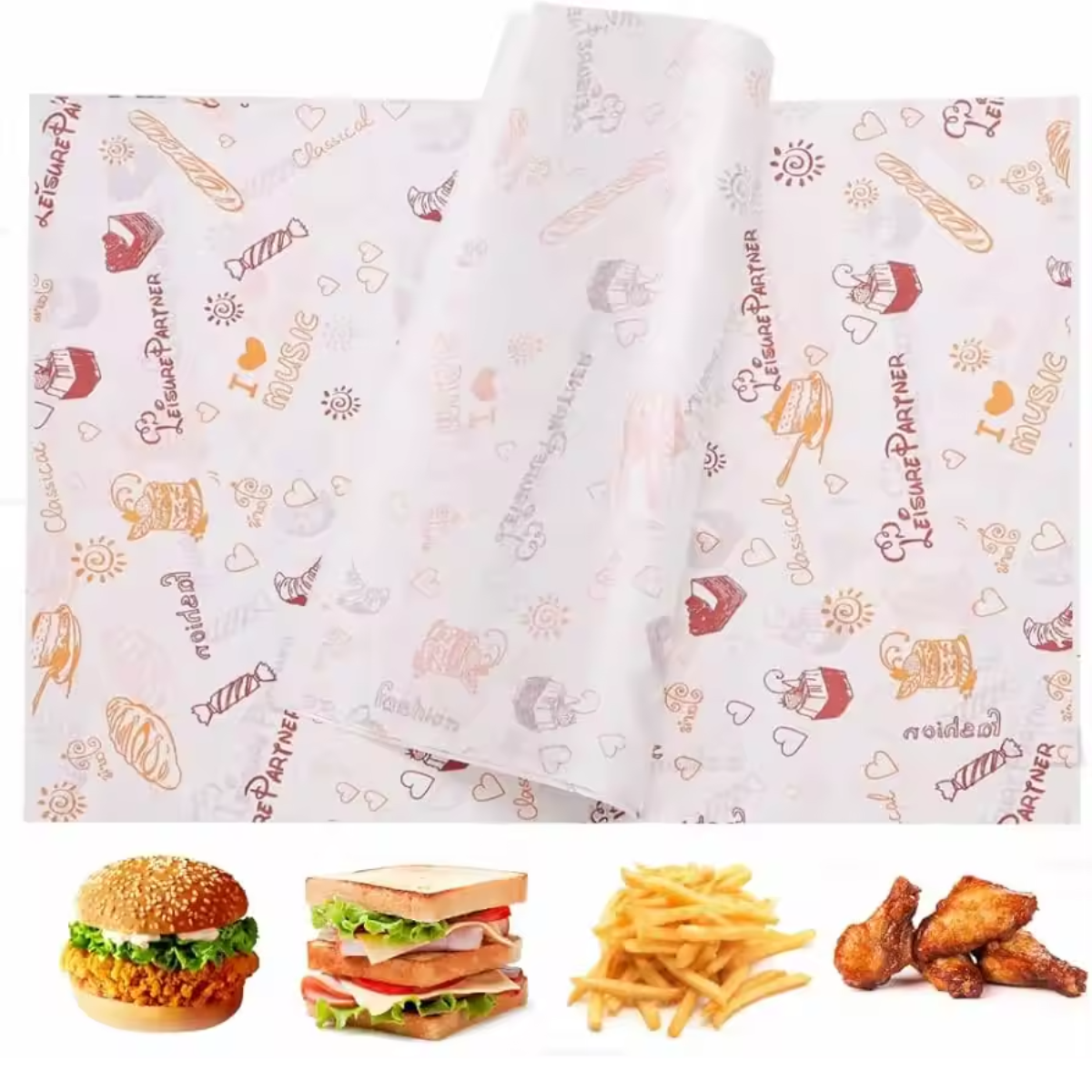
In the competitive food service and retail landscape, packaging is no longer just a functional necessity — it is one of the most powerful touchpoints a brand has with its customers. greaseproof wrappers have emerged as a prime canvas for businesses looking to communicate their identity, build recognition, and deliver a premium unboxing experience. Whether you operate a fast-casual burger chain, a boutique sandwich shop, or a large-scale food manufacturing operation, the ability to customize greaseproof wrappers with your branding elements can meaningfully differentiate your product in the market.
The customization of greaseproof wrappers involves much more than printing a logo onto paper. It requires strategic thinking about material selection, print methodology, regulatory compliance, and design intent. This guide explores the key decisions and practical steps businesses need to navigate when developing branded greaseproof wrappers — from understanding your base material options to working with suppliers on print-ready artwork and minimum order quantities.
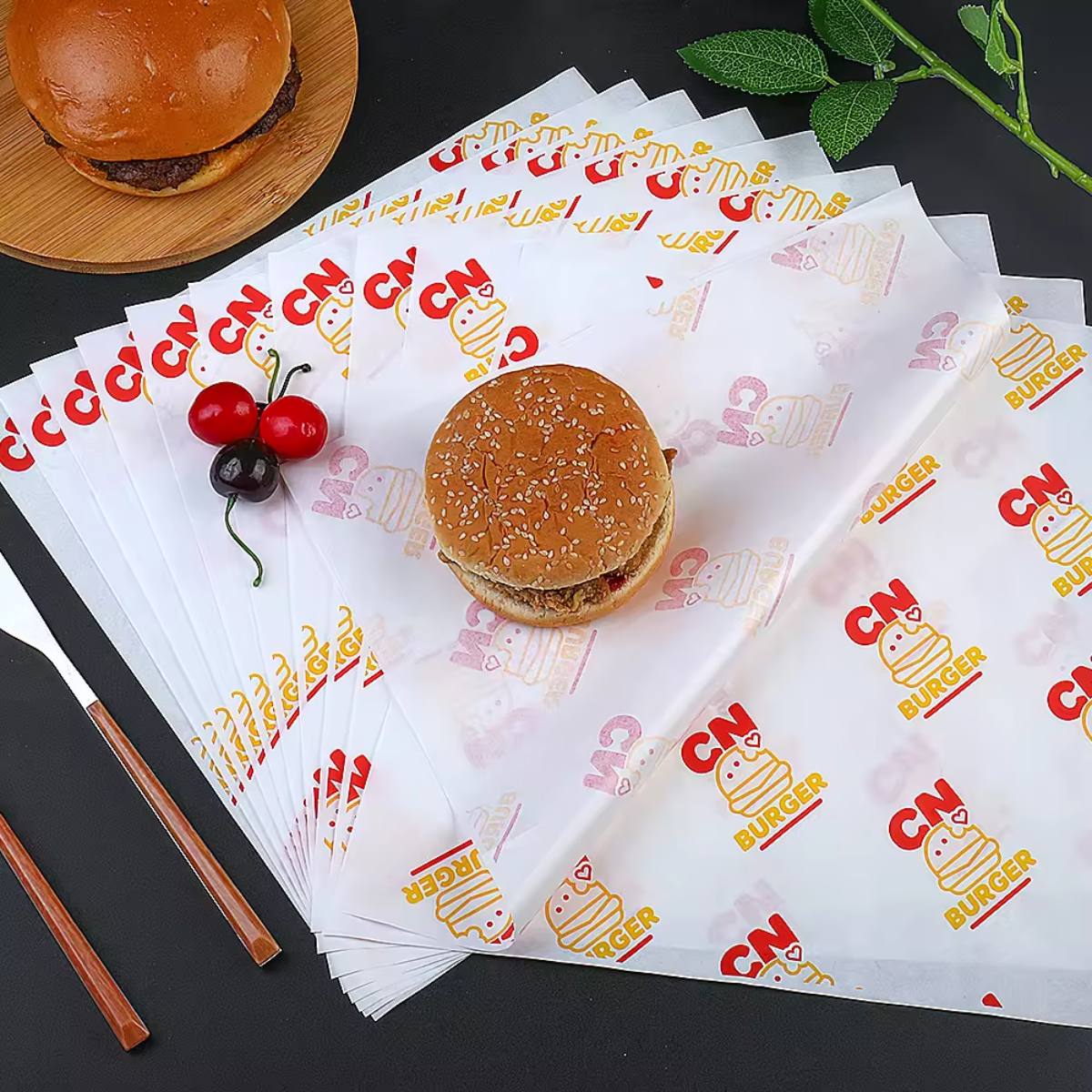
Understanding What Makes Greaseproof Wrappers Suitable for Branding
The Functional Foundation of Greaseproof Wrappers
Before any branding conversation can begin, it is important to understand what makes greaseproof wrappers uniquely suited for food packaging. These wrappers are engineered with a grease-resistant barrier — typically achieved through a coating process, a calendering technique that densifies the paper fibers, or a combination of both. This barrier prevents oils, fats, and moisture from seeping through the paper, keeping the food fresh and the packaging visually intact during the customer's experience.
This structural quality directly impacts the branding potential of greaseproof wrappers. Unlike regular paper that can become translucent or soggy when it contacts greasy food, a well-manufactured greaseproof wrapper maintains its surface integrity. That means your logo, colors, and printed patterns remain vivid and readable from the moment the wrapper is handed to the customer until the last bite. The functional performance and the aesthetic performance are deeply linked.
For businesses investing in custom branding, this durability is non-negotiable. Greaseproof wrappers that lose their visual sharpness under real food contact conditions will undermine the branding investment. Selecting a wrapper that combines food-safe coating with strong print receptivity is the critical starting point for any customization project.
Why Greaseproof Wrappers Are a High-Impact Branding Surface
Greaseproof wrappers occupy a unique space in the customer journey. They are handled directly, they are visible at the moment of consumption, and they often appear in social media photos shared by food enthusiasts. This makes them far more impactful than secondary packaging formats that are discarded before the food is seen. Every time a customer unwraps a burger, sandwich, or pastry, the greaseproof wrapper is center stage.
For businesses in the fast food and quick-service restaurant segment, greaseproof wrappers function almost like a mini billboard. A bold pattern or a well-placed logo on greaseproof wrappers instantly signals quality, consistency, and attention to detail. Customers associate thoughtfully branded packaging with a brand that cares about its product — and that perception has real commercial value.
In the context of food delivery, where the unboxing moment has taken on even greater importance, branded greaseproof wrappers extend the brand experience beyond the restaurant or retail shelf. They create a moment of visual delight even when the customer is eating at home, reinforcing loyalty and encouraging repeat engagement.
Key Customization Options for Greaseproof Wrappers
Print Design and Color Customization
The most direct form of customization for greaseproof wrappers is print design. Businesses can work with packaging suppliers to apply logos, brand colors, taglines, patterns, or illustrated graphics directly onto the wrapper surface. The most common printing techniques used for greaseproof wrappers include flexographic printing and digital printing, each offering distinct advantages depending on order volume and design complexity.
Flexographic printing is typically preferred for large volume runs of greaseproof wrappers. It uses flexible relief plates and fast-drying inks to produce consistent results at scale. This method works well for simpler designs with limited color fields, and it is cost-effective when the same design will be printed across hundreds of thousands of units. For businesses operating at high volume, this is often the economically optimal path.
Digital printing, on the other hand, allows for shorter runs and greater design flexibility. It is ideal for businesses that want to test multiple versions of their greaseproof wrappers before committing to a large production run, or for seasonal promotions and limited-edition packaging campaigns. Digital printing on greaseproof wrappers enables more complex graphics and photographic imagery, though cost-per-unit tends to be higher compared to flexo at scale.
Size and Shape Customization
Greaseproof wrappers are not one-size-fits-all. Businesses have the option to specify custom dimensions to match their specific food products precisely. A wrapper that fits a standard burger differs significantly from one designed for a hotdog, a sub sandwich, or a pastry. Getting the dimensions right is essential both for functional performance and for the visual impact of the printed branding.
Custom sizing of greaseproof wrappers also enables more intentional design placement. When a wrapper is sized to wrap a specific product, the designer can control exactly where the logo appears once the product is wrapped — whether that is centered on the front face, positioned at the fold point, or revealed when the wrapper is partially opened. This level of intentionality elevates the branding beyond a simple print job and turns the wrapper into an engineered communication tool.
Some businesses also request die-cut greaseproof wrappers with custom shapes or perforations that allow customers to tear open the wrapper in a specific way, adding an interactive element to the brand experience. These functional design choices add perceived value and can become a recognizable signature of the brand over time.
Material and Coating Selection
The choice of base material significantly affects the look and feel of customized greaseproof wrappers. Suppliers typically offer options ranging from standard greaseproof paper with a basic barrier coating to premium variants with glossy or matte finishes, embossed textures, or compostable materials for businesses with sustainability commitments. Each material choice influences how ink adheres, how colors appear, and how the wrapper feels in the customer's hand.
Businesses increasingly seek greaseproof wrappers that align with their environmental values. Eco-certified papers that are biodegradable or compostable allow brands to communicate sustainability credentials through the packaging itself. Printing 'compostable packaging' or relevant certification marks directly onto greaseproof wrappers can reinforce brand positioning among environmentally conscious consumers.
The Design Process for Branded Greaseproof Wrappers
Developing Print-Ready Artwork
Creating effective branding for greaseproof wrappers requires artwork prepared to professional print standards. Packaging suppliers typically request vector-format files — most commonly in AI, EPS, or PDF formats — to ensure that logos and text remain sharp at any scale. Raster images sourced from websites or low-resolution files will produce blurry or pixelated results when printed onto greaseproof wrappers, which defeats the purpose of the customization investment.
Color management is equally important. Print colors for greaseproof wrappers are specified using CMYK or Pantone (PMS) color codes rather than the RGB values used for screen design. Businesses should work with their graphic designers or brand teams to convert all visual assets into the correct color mode before submitting artwork to a packaging supplier. A minor color shift might seem insignificant on screen, but it can result in brand colors appearing noticeably different on the physical wrapper.
Suppliers of greaseproof wrappers typically provide dieline templates — flat layout files that show the exact dimensions and fold lines of the wrapper. Designing within these templates ensures that critical brand elements do not end up in fold zones or trimmed areas. Requesting a physical proof or digital mockup before approving full production runs is a best practice that protects branding investments.
Balancing Aesthetic Goals with Functional Constraints
One of the realities of customizing greaseproof wrappers is that the food-safe coating or treatment that provides grease resistance can sometimes affect ink adhesion and color vibrancy. Some coating formulations create a slightly waxy surface that causes certain ink types to appear less saturated than they would on standard paper. Understanding this constraint early in the design process helps businesses set realistic expectations and choose designs that look excellent within these parameters.
High-contrast designs — bold dark logos on white or lightly tinted greaseproof wrappers, for example — tend to perform most reliably across different coating types and printing methods. Very fine detail work, gradients, or photographic imagery may require more careful supplier selection to ensure the final output meets brand standards. Requesting sample prints on the actual wrapper material before finalizing artwork adjustments is the most reliable way to validate design choices.
Functional readability also matters. Greaseproof wrappers that will be used in fast-paced service environments need to communicate clearly and quickly. A wrapper that features the brand name and core visual identity in a manner that is legible at a glance serves its purpose better than an overly complex design that requires close inspection to interpret.
Working With Suppliers on Custom Greaseproof Wrapper Production
Evaluating Supplier Capabilities and Minimum Order Requirements
Finding the right production partner is one of the most consequential decisions in the customization journey for greaseproof wrappers. Suppliers vary significantly in their capabilities — not all offer the same range of print techniques, material options, custom sizes, or coating types. Businesses should evaluate potential suppliers based on their experience with food-contact packaging, their quality certifications (such as ISO 22000 or FDA-compliance documentation), and their ability to produce samples before committing to full runs.
Minimum order quantities (MOQs) are a practical consideration for businesses of all sizes. Many suppliers of custom greaseproof wrappers set MOQs based on the complexity of the print setup, the type of material, and the degree of customization. Smaller businesses or those testing a new design may find that certain suppliers offer more accessible entry points through digital printing, while larger operations with predictable demand can negotiate favorable unit pricing through larger flexo print runs.
Lead times for custom greaseproof wrappers vary depending on the level of customization. Standard orders with established artwork typically have shorter production windows, while orders requiring new plate creation, material sourcing, or extensive quality testing may require several weeks. Building lead times into procurement planning ensures that businesses are never caught without branded stock during peak periods.
Ensuring Food Safety Compliance in Customized Wrappers
Any greaseproof wrappers intended for direct food contact must meet applicable food safety regulations in the markets where they will be used. This encompasses the base material, the grease-resistant coating or treatment, and the inks or dyes used for printing. In many regions, food-contact packaging must comply with specific migration standards — meaning that the substances used in production must not transfer to food in harmful quantities.
When customizing greaseproof wrappers, businesses should request documentation from their supplier confirming food safety compliance for all components used in production. This includes certifications for the paper substrate, the barrier coating, and the printing inks. Food-safe ink systems — such as those formulated specifically for food contact applications — are a fundamental requirement for any greaseproof wrappers that will touch food directly.
Compliance documentation also protects businesses in the event of a regulatory inspection or a customer complaint. Maintaining records of the specifications and certifications for your greaseproof wrappers is part of responsible procurement and brand protection. Working with suppliers who proactively provide this documentation is a signal of their credibility and reliability as a production partner.
FAQ
What information do I need to provide to a supplier to get custom greaseproof wrappers made?
To order custom greaseproof wrappers, you will typically need to provide your desired dimensions, print-ready artwork files in vector format, Pantone or CMYK color codes, the type of food the wrappers will contact, and your required order quantity. Some suppliers also ask for your preferred material type and coating finish. Providing a clear brief upfront helps reduce revision cycles and speeds up the sampling process.
Can greaseproof wrappers with custom printing still be food safe?
Yes. Reputable packaging suppliers use food-safe ink systems specifically formulated for food contact applications. When sourcing custom greaseproof wrappers, always request compliance documentation confirming that the inks, coating, and base material meet the food safety regulations applicable in your market. Prioritizing certified suppliers ensures that your branded packaging does not compromise food safety standards.
How do I maintain consistent branding across multiple wrapper sizes or product lines?
Consistency across different sizes of greaseproof wrappers is achieved through a clear brand style guide that specifies logo placement rules, approved color codes, minimum logo sizes, and font usage. Sharing this guide with your packaging supplier and requiring proofs before production runs helps ensure that the design scales correctly across different wrapper formats. Using the same print supplier for all wrapper variants also reduces color inconsistency between batches.
Are there sustainable options for custom greaseproof wrappers?
Yes, sustainable custom greaseproof wrappers are available from many suppliers. Options include wrappers made from FSC-certified paper, those using PFAS-free grease barriers, and compostable variants that break down in industrial or home composting environments. Choosing sustainable greaseproof wrappers and communicating that choice through on-wrapper messaging or certification marks allows businesses to align their packaging with broader environmental commitments and meet growing customer expectations around responsible sourcing.
Table of Contents
- Understanding What Makes Greaseproof Wrappers Suitable for Branding
- Key Customization Options for Greaseproof Wrappers
- The Design Process for Branded Greaseproof Wrappers
- Working With Suppliers on Custom Greaseproof Wrapper Production
-
FAQ
- What information do I need to provide to a supplier to get custom greaseproof wrappers made?
- Can greaseproof wrappers with custom printing still be food safe?
- How do I maintain consistent branding across multiple wrapper sizes or product lines?
- Are there sustainable options for custom greaseproof wrappers?